Monday, 29 August 2011

Hadith about Love of Rasul Allah and Poverty

Hadith about Love of Rasul Allah and Poverty (1st posted MySpace 25/6/07)


Asalamu Alaykum..
I am no Scholar, and I don't care to be one.... 
But even then my religion (deen) is ACCESSIBLE to me........ is valuable to me................... forms me, informs me.....

Today I was listening to a Nasheed CD praising the Prophet of Allah (the One true GOD, the GOD of Noah, Abraham, Ishmeal, Isaac, Jacob, Joseph.... Moses and Jesus (as)) -Muhammad (saw) the last Prophet of God. 

And I heard a hadith.. a saying of our Prophet (saw)... Muslims down the ages have always tried their damnest to keep the sayings of Rasul Allah (saw) 100% true and correct. He (saw) always emphasized the need for objectivity in reporting his saying. In his (saw) last sermon at the farwell Hajj, he said tell those who are not present, perchance they may understand it better than those present.

We are not present.. perchance God may grace us to understand it better!
Paraphrasing... which is not what a good Scholar does (but I am no Scholar)...

"A man came to the Prophet of God (Muhammad bin (son of) Abdullah (saw)) and said "Truely I love you O Messenger of God", he repeated this three times by way of emphasis. Muhammad (saw) replied: "If you truely love me then prepare for poverty!".

MashAllah (Glory be to God- how perfect a response). However lets try and get our teeth into this one... try and analyse it.

Whenever there is a statement always ask yourself "Is it general or is it specific?" 

If it can be general then take it as general, if it cannot be general then take it as specific. 

Generality should always take precedence over specificity. And most people interpret this hadith generally- that if you love the Prophet of God- Muhammad (saw)- then you needs must expect poverty.

This cannot be general, for there are msany examples of people who loved Muammad (saw) who are/ nor were poor. One example that springs to mind in Abu Hanifa (rm), another Uthman bin Afffan (ra).

So if we take it as a statement specific to this companion of Muhammad (saw) what light can it throw on his nature? 

It is well known through other hadith that Muhammad (saw) was a man of his time, knew his companions well and had the ability to fortell their fortunes... their lives and deaths etc...

So it is highly likely that when this man came to the Prophet (saw) he knew him, knew his state, knew his capability and realised that this man would be poor, and probably die poor. 

So he (saw) told him to prepare for poverty.

How magnanimous of him, how incredible of him, how loving of him? 

The man when he attained poverty, would, instead of complaining to God, take it as proof of his love of Rasul Allah. Muhammad (saw) saved him from complaining to God about his lack of means... confirmed his belief....and blessed him with much.

Indeed Allah t'ala (God) has blessed and enriched us with the most abundant life to have ever lived... with the life of Muhammad (saw). May God reward him enummerably, magnanimously....and send our salutations and peace upon him.

Shafi     

Sunday, 14 August 2011

Unacceptable & Acceptable Islamic Scholarship: Towards a Prescriptive Kuhnian Model

Unacceptable & Acceptable Islamic Scholarship:

Towards a Prescriptive Kuhnian Model.

Preamble.


Recently I attended "Living Islam Camp 2011". Showcased were the arguments from a selection of Islamic Scholars, including the renowned Imam Zaid Shakir, of the Zeytuna Institute, USA. It was interesting to note his construction of acceptable arguments and then to juxtapositions that with the construction of unacceptable arguments. A keynote seminar asked, or rather implied, that we Muslims are "... intellectually stagnant."


The Age of Science & Technology.

If we suppose that Islamic Scholarship is stagnant, then do we also suppose that the way out of that box is the creation of new knowledge?


We live in an age of Scientific and Technological innovation, which quite correctly premises that the measure of any knowledge is how useful it is.


Within that field Science Theorists, post Kuhn, have recognised that Science as an activity is in the "business" of falsifying given or accepted knowledge. Within those boundaries scientific endeavour is both progressive and generative. Indeed the measure of the success of a scientific discipline is given by how many journals are devoted to its endeavours, and concurrently how much money is spent doing it. And a scientific postulate only becomes a theory when it provides both testability and falsibility (note: not its fallibility, but its ability to be falsified), that both guarantee an avenue for further work and therefore further spending. If a postulate remains "ill-defined" within those terms then the community of scientists will never progress the idea to the level of theory.


That the Qur'an mentions both that type of activity as a means of providing proof of its authenticity, "if you are able then produce a like thereof" (s2 v23-24), and the scientific implication of a movement towards future and greater scientific truths,* "WE will show them our proofs", is interesting. An furthermore it is interesting to note that the first refers to what Science Theorists now term eliminative proof (or proof by contradiction) which they are generally agreed is the greatest of the types of proof.


For what we call Islamic knowledge is quite unlike scientific knowledge.

Most definitely all knowledge is Holy.


But whilst the Qur'an summons us to examine and scrutinise our World, it likewise summons us to use that pursuit to strengthen and verify our belief in immutable and subtle truths. And whilst scientific knowledge is both necessarily testable and falsifiable, those truths are not.


Unchangeable Truths.

The Qur'an at core declares that Muhammad (saw) was both the personification of the perfect man, "in him you will find the best of examples to follow", and one who knew best the Qur'an.


The truths that Muhammad (saw) saw in the Qur'an are immutable. Throughout history Muslims are agreed on the fact that Muhammad (saw) perception of the Qur'an transcended both his environment (the Arab nation) and his time (7th Century CE).


If we believe that those truths espoused by the Qur'an are unchangeable then how can we compare any endeavour related to it with the scientific endeavour.


Contrary to the position occupied by the panel discussing Islamic intellectual "development or the lack of it", at the camp, I do not believe that a measure of the successfulness of Islamic Scholarship should include how many institutes, journals and money is spent doing it.


Indeed when we examine the past of Islamic Scholarship we find the contrary held. The Muslim Scholars that we remember well were often poor, and though famous, were never funded, even to the extent of refusing patronage from the ruling classes.


Islamic Scholarship.

Should, then, Islamic Scholarship be modernised so that it plays to the tune of contemporary Scientific Scholarship?


And then if Islamic Scholarship cannot concern itself with the creation of new knowledge, what can it perform of usefulness to the wider population?


Within this context it becomes obvious that Islamic Scholarship should be about the re-invention, or re-discoverisation, of things you already know. The strengthening of connections already made. And the focusing of sight on those things in a new light and from another contemporary view.


Even if we believe, as in this instance, that there is no new knowledge does that necessitate passivity?


No it does not because whilst we might agree that Muhammad (saw) best understood the Qur'an and hence that the truths expressed in the Qur'an are immutable and unchangeable, we might also realise that he (saw) purposely left a lot of that understanding unexpressed.


Taweel & Tafsir.

For whilst Muhammad (saw) was encouraged and therefore commanded to tell all;

 وَمَا هُوَ عَلَى الْغَيْبِ بِضَنِينٍ

"And he (Muhammad (Peace be upon him)) withholds not a knowledge of the unseen." (81:24);

it is worthy to note that the command relates to the unseen that he witnessed, and so the prior verse informs the latter in that it relates to Angel Jibrael (as) in his visible and true nature. And not therefore everything that the Prophet (saw) knew in regard to the revelation of the Qur'an and its taweel (explanation). We know of several verses that were explained by the companions of Rasulallah (saw), and where strikingly that explanation was not confirmed by Rasulallah. And one instance where a companion (as) wrongly interpreted a specific verse and which was later corrected by the Prophet (saw).


It is as if the Prophet (saw) had intended and indeed encouraged for the door to taweel (the interpretation of the Qur’an) to remain open.


And then we might notice that the Qur'an as a source and guide book is replete with questions not just explicit, but more importantly those implicit ones, just waiting to be asked.


My understanding of this issue has been covered in these previous blogs.


A Worldly Knowledge.

And so the doors of taweel in regard to the Qur'an remained an open source of endeavour, which is in itself generative. Because it is in the nature of relevant questions in regard to the Qur'an to generate yet more questions in regard to our World, not just a present contemporary World, but furthermore a distant past and a looming future.


And so for a Muslim a study of the Qur'an is just as generative, in terms of both questions and endeavours, as the business of doing science whilst at the same time not in the job of falsifying truths but embellishing and verifying them. And thus if the measure of a knowledge be its usefulness then the Qur'an is shown to be at the very least on a par with Science, and at the very best in regards to the believers far excelling Science. And then in that regard it transpires that the Scientific endeavour is but one branch of the greatest and first of Islamic Sciences; Tafsir ul Qur'an, investigations into the meaning of the Qur'an.


Generative & Progressive.

And so we come full circle, having I hope shown that whilst Islamic Scholarship might not invent anything new, and is concerned with the embellishment of given truths, it nevertheless is generative. Furthermore it is progressive even whilst we agree that the understanding that Muhammad (saw) held of the Qur'an transcended both his time and his social context, precisely because it is a timeless revelation sent for all generations and nations of people that would follow.


When we admit that then the Qur'an becomes relevant in any and all contexts that we might throw at it. It speaks to all of us in whatever language we might wish to consult it in.


The Process of Knowledge Creation.

But then therein lies the rub, that both acceptable and non-acceptable "new" knowledge creation works by removing a text from its original context and placing it in another. What distinguishes acceptable and unacceptable knowledge creation is not how it is done, but rather the context through which we view it.


To give you an example of acceptable knowledge creation Imam Zaid Shakir at the conference played with the context of a given text from the Hadith of Rasullah (saw).


Muhammad (saw) said that a believer leaves alone the business of that which does not concern him. As a standalone recommendation for godly behaviour it is clearly concerned with social interaction, put simply mind your own business and do not concern yourself with the business of others.


Imam Zaid Shakir removed it from its social context and said that the business of a believer is imaan (faith). And then he extended the argument to say that thus Muslims should only concern themselves with things that help increase their faith.


It was a novel use of the first phrase that led to a collective eureka moment. What made the argument acceptable was that he was talking to Muslims who were concerned with increasing their faith.


Off course I can easily contrast this example with the many examples of poor contextualisations from the Sufi order or other field of the religion. But my point is to show that acceptable knowledge creation works by the same process.


And indeed if we were to take Imam Zaid Shakir’s innovation to its logical end, it would mean that vast areas of pure mathematics that have benefited humanity manifold would never have been. Precisely because the developers never thought or believed that their work would have such an incredible impact on our lives. Is it then that we should premise that knowledge for which we have no current need is not holy? Then what of the similitude of the gnat mentioned in the Qur'an? (s2:26)


So then if acceptable and unacceptable knowledge cannot be differentiated in its method of generation, nor in its contextual implication (since it would typically verify what you chose already to be given and true), how then can we proceed towards a semblance of Truth.


Checks, Balances & further generatives.

Maybe our checks and balances should include not just attempts at being free from contradiction by examining arguments through taking them through to their logical conclusion (as I did with Imam Zaid Shakirs argument), but also actively seeking out seeming contradictions in the vast corpus of tradition which is our religion. And by that I mean not in the religion per se, but in our contemporary understanding of it and its ongoing development.


And then it is that that study of those seeming contradictions can become a further engine for generative thought.


And so I hope to have shown you full circle that the generation of Islamic knowledge does have a semblance of scientific endeavour to it, most especially when we consider it in Kuhnian terms. That it can be both generative and useful and that it appeals to its consumers who are none but ourselves.


Towards a Kuhnian theory of Islamic Scholarship.

And I have prescribed a methodology for the generation of new Islamic knowledge as being centred on Tafsir ul Qur'an and it's Hikmah (being that which was sent down upon Muhammad (saw) other than the Qur'an), in the style of Tabaree whereby contextual questions within the framework and body of Islamic Knowledge are not frowned upon, but in fact lead the way towards the embellishment of still greater truths. 


Where seeming contradictions lead to further investigative work. 


Where this work is not done in institutes far removed from the experience of everyday Muslims. After all Islam is a religion that is lived and not held in books, save obviously the one book which states of it itself that is a guide book for all those who believe.


Shafi, written in haste :-)

Thursday, 7 July 2011

The fallacy of disbelief(polytheism, agnosticism, atheism etc).

The fallacy of Shirk (Disbelief= polytheism, atheism, agnosticism).


By this I do not mean that Shirk doesn't exist, or that there is nothing wrong with it. 

The GOD of all things
Contrarily, Polytheism and not recognizing the transcendence of GOD (that GOD is High, above all things) is the root cause of all that is base in this World.  Precisely because the ultimate principle that underlies the whole of being is Creation, and then Nourishment.

To recognize ONE Creator is to do justice to that principle of the Oneness of Origin and Sustenance for all.

To fail to recognize HIM is to do injustice to all that is. And that is the source of all imbalance, and all injustice. 

Polytheism
And even when polytheism tries to take the mantle of an ethic, of a type, it gets the balance wrong and confuses justice and mercy.

This because essentially you choose to serve whichever god you wish, a self serving choice, from the wish to identify with a particular group to the wishes for prosperity. For whatever reason that choice is always taken without principle.

Atheism & Agnosticism
And the like argument applies to those who deny GOD, their lives are subsumed by an irresolvable conflict of interests, of passions and of tin-pan ethics. Because they deny the greatest of principles, they are without principle. 

Their ethics have been shown to be contradictory for whilst they often-times would claim for it to be universal and then in the same breadth their actions would deny it’s universality to some, on the false basis that they are undeserved. Time and time again, this is their politics and their ethics; two faced, spurious, driven by lust and money even whilst they deny. 

Thank GOD, I have been born in a Nation that has a long history of principled behaviour. That I can see with my two eyes the wavering fools who cast themselves as the leaders of this World. 

Now, look at me, I started on an vein and then been caught on another, never would I make a successful gold-digger. 

Is Islam any better?
But since we are here, I must press on with the manifold implications of this stance. What then, I hear you ask, of the non-believers living under the duress of Islam?

Freedom of conscience
The first thing to realize is that the concept of freedom of conscience that Europe holds so dear, it learnt from Muslims. For long before the laws of equality of humanity ever broached the shores of Europe, European Jews and Nestorian Christians, and other Christian sects, were flying to the Muslim lands so that they would have the freedom to practice their religion without fear of persecution.

Liberalism is Islam without GOD
But that does not mean that Liberalism is Islamic, contrarily the universal justice of Islam when taken out of the context of a unitary source of nourishment and origin, leads to just that but without the boundaries that define true justice.

This because the primary function of justice should be the prevention of injustice, and not the seeking of redress.

A universal Justice?
Islam provides for such boundaries whereby everybody's rights are balanced, and it does this through setting law firmly within an ethic surrounded by on the one hand gratitude and generosity and on the other through a real emotive fear not just of a punishment, but more importantly of Godly displeasure, couched in the wonderful words of a literary masterpiece- the Qur'an. For if a man displeases GOD, who is both his creator and nourisher, whom then can he turn to?

Whereas, the justice of liberalism will always be too late. And it's redress can never be enough, because it is not framed by an absolute source but by the vagaries of man's thought. And then it always fails in it's universality, being dependent on individual men, their judgments, whims and fancies. 

A universal freedom?
And furthermore Liberalism can not free man from the narrowness of his arrogance, but only confirm him in it.

I should not need to draw examples from the American bill of rights which extends to the rich few, whilst they rape the World of its people and resource. Nor of the European universal human rights which does not extend to the Palestinian children living under occupation. Two faced, giving the lie to all they espouse. 

Justice and Freedom in Islam
Returning to the question of a non-believer living under the law of Islam. He would never worry over recourse to justice, primarily because our law of protection would extend fully to him. Many a time the Qur'an recalls to us that GOD loves the justice-doers, and that is irrespective of belief or nationality. As happened previously in our history, the people of the Book would be judged according to their own law. And those who have no principle would have the safety of knowledge that in regards to their beliefs they would be free to do as they liked, but in regards to social and family law they would be bound by our law.

Rights and Obligations
And so in the Muslim society, the individual has rights but not so long as it is detrimental to the family, and families have rights but not so long as they impinge on the rights of society, and none can overstep the boundaries established by GOD as being His rights over us, and then our rights over each other. 

The body of text which is Islam speaks in dept on these rights. 
And it is instructive to note the depth of meaning that can be ascribed to the Basmallah. 

The Basmallah
For most these are the words of dedication to GOD, made whenever you perform any act, but they are most often used when beginning to eat most often translated as "In the name of Allah (God), most gracious, most merciful.". 

However the import of these words was understood by the first Caliph, Abu Bakr as Sidique (ra), to be far greater than that. For after the passing of Muhammad (saw), whilst Arabia rocked under successive rebellions, and the Romans threatened from the North, causing him to send of the Muslim army to meet them, which was headed by a young novice of a captain, he advised the young captain on the rules of war and it's etiquettes beginning with "Do not eat food, but that you mention the Basmallah over it..."

Some might argue that to emphasize the small, is to emphasize the whole edifice of the religion. Indeed when you are in the thrall of great deeds, it is the small rituals and habits that keep you sane and grounded. 

But at the same time the Basmallah carries within it's potency a rendering of the rights of all things, no matter how small the morsel. That you partake of it in and by GOD's leave. And that by not doing so, you do an injustice to both it and yourself.

That it has a right, and that you can only subsume that right through taking leave and the name of the One who created and nourished it in the first instance. 

That is the Basmallah, and whilst it is the smallest of our religion, it is potentially the greatest. 

And it is that saying of those words in that circumstance that marks Islam to be "The Modern Religion". That all things have a right over you, and that those rights are balanced through the belief in the One Merciful God who continually nourishes us all, believers and non-believers alike.

A belief that guarantees a universal justice.
A reality, both past and future, that no liberalism could ever replicate. 

The fallacy of Shirk part 2 to follow.
And we send our peace and blessings on the noble Messenger, Muhammad (saw), may ALLAH t’ala reward him abundantly for we never would have been Muslim save for him. And I bear witness that there is no GOD, save ALLAH t’ala (GOD, most High) and Muhammad (saw) is His last and final Messenger. And I bear witness that Muhammad (saw), by GOD’s mighty grace, has completed his task, that which was entrusted him by GOD, and we are the recipients of the message down through the ages. Ameen.

Tuesday, 28 June 2011

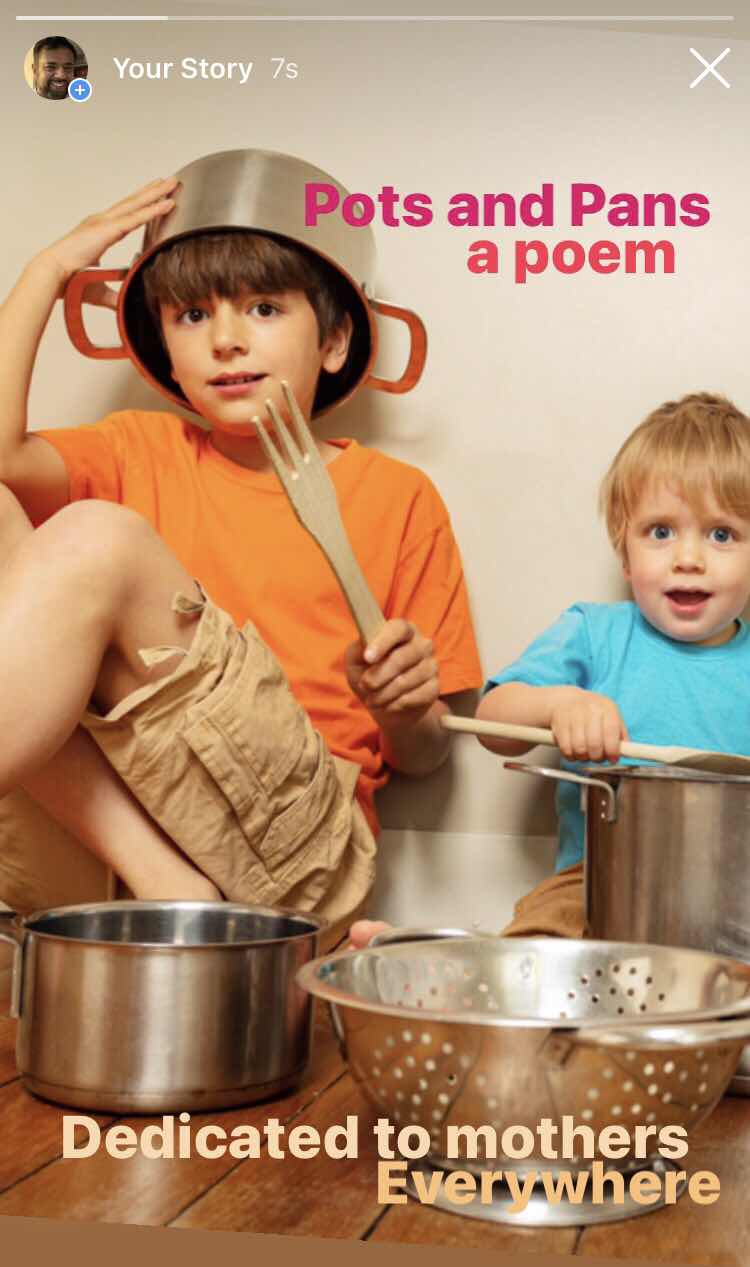
Cups and Saucers, a Poem


Cups and saucers, pots and pans.
Like a boy in Alice's Wonderland.

My memories flood with fleeting impressions,
Like the smile of that Cheshire Cat.

"Drink me!", Shrinks me,
Till I'm small again, sitting in your lap.

Aprons and bangles, buckets and mops.
Spinning with my tops.

Bathing and drying, dressing is charming,
Powder's comforting spell,

Smashing and splashing,
Inkling and drinkling from my own special well.

O mother dear,
Thank you for all those times,
Thank you for your kind, consoling hands.

"Drink me!" and once again,
I'm a grown man.

But mother darling,
I'll forever be your grateful son.

Whilst you don on me my well worn apron.
And freely let me dabble here and there,

Ever stirring and mixing away,
And even to this day,
Guided by your tending hands.

Whilst the sweet smell of fresh baked cakes wafts by.
And sticky fingers reminisce,
With drippings of fresh kulfi malai.

O sweet mother dear,
These are the cherished
moments of my childhood.

Ever sweetened with the laughing tear,
Thank you, o my mother dear.

For removing all my fear,
With your comforting zone,
and an ever warm embrace.

A smiling face.
And a mockery of the chase.

O my mother dear,
Truly you deserve an everlasting big great whopping cheer.

Cos, for me you are without peer,
Without compare.
O, I do love you so, mother dear.

The End. 
Dedication, for my mother and all mothers, for my wife, the mother of my children.


And Muhammad (saw) said, "Heaven lies at the feet of (the) mother". Meaning in serving and being kind to them, for they themselves nurtured you and loved you whilst you were young.

Wednesday, 4 May 2011

Progressive Politics: Republicans and Democrats, Conservatives and the Progressives. Making Sense of Partisanship.

Progressive Politics

I have often wondered at the difference between the Republicans and Democrats in the U.S. There everyone, no matter whom they are, views the Royals as being at best a quaint remnant of a bygone era (i.e. in support of a Republic as opposed to a Principality).

Indeed the very union of the Northern American States was at inception grounded in revolution against a distant English Crown. And so all of the founding fathers of America no matter where they stood on the broad political spectrum defined themselves in opposition to Royalism.

Royalists, Conservatives and Republicans.
Whilst in England the Conservative Party has traditionally been able to garner support from both the upper and lower classes. Joe Public's fascination and indeed identification with the Royals has been the prime reason for such paradoxical behaviour. And whilst Labour would seem the natural party for the worker class, it has traditionally garnered support from the more middling classes.

Then it always seemed strange to me being brought up on these isles that the Republican cause is most mirrored by the traditional Conservative party, who themselves have a strong Royalist sentiment. And that whilst Labour likewise is mirrored in the Democrat cause, the Democrat movement does not sound like a pro Worker movement.

Indeed the puzzle of these comparative politics was only heightened for me by the recent right Royal Snub that was afforded to the two former Labour premiers at Wills and Kate's wedding ceremony. But whilst Royalism and Conservatism sit well together in England, in order to understand their real import it is instructive to look across the pond to our cousins. There Politics is not complicated by the addition of the third royal factor, which defines a peculiar brand of patriotism based solely around the fortunes of one family.

Comparative Patriotism.
And even if we were to include the Patriotic element into our considerations we would note that Patriotism as a word and concept is more well-worn in the U.S than in England, where it essentially means a monolithic Roman-type Justice that "we (the U.S of A.) can do no wrong". To argue as Muhammad (saw) successfully argued, against the then prevalent Chiefs of Arabia, that to prevent a brother doing a wrong is to in fact aid and help him, is impossible within the U.S's Patriotic framework. Whilst in England Patriotism, being less well used, means many things to many people. It can mean, as recently evidenced, the fascination in the ongoing saga of one family, the support of our sporting heroes, the expulsion of foreign citizens or, as in the American case, the gung-ho support of our military adventures irrespective of the right or wrong footedness of them all. And so, mercifully, Patriotism as a political force is more moderate and more complex in the green gardens of England. Thus my wish to ignore it, in the belief that through simplifying the picture we can generate more understanding.

Progressives v/s Conservatives
What really helped answered the puzzle for me was reflection on the arguments for the Progressive Politics of both Labour and the Liberals in the previous electoral contest and in the run up to the referendum on the 5th of May.

Progressives stand in opposition to being Conservative. Both the Labour and Liberal camps claimed "progressiveness" for themselves in the recent election contest. But whilst each was talking the same language, they meant opposing things.

All progressives define themselves with reference to a regressive and blameworthy past. And it is what they see as blameworthy that is the crux of the matter.

The Conservatives see dependence on Welfare as such. Whilst it is undoubtably blameworthy it certainly cannot be called regressive. Rather the Welfare State belongs to a glorious past and a vision that was the then envy of the World. Even in the blandest of economic terms that views workforce as a commodity to be traded, the provision of a safety net, for those unable and incapable of work, is progressive.

The overt rise in the rampant abuse of our Welfare does not belong to our past, but has been exacerbated by our backdoor entry into Europe and the adoption of the European wide Human Rights legislation. Neither of those two ingredients have been successfully challenged by the now Conservatives. And indeed in these terms the only real regressive policy threatening today is the dismantling of the Welfare State.

This is precisely why the Cameronian reforms are doomed to failure, because they are themselves regressive. Whilst interestingly Cameronianism has never claimed a progressive pedigree.

The Labourian vision of a regressive past will not, at least not in words, try to dismantle Welfare. What they meant by progressive was an increasing participation of the private sector in public works.

Different words but essentially the same idea. And then the only question left to debate is whether or not the congruence of such policy would in fact cause the rolling back of the State, and whether or not such an eventuality might cause increasing disparity and injustice in our country.

The only party that really held a different progressive view for our country were the Liberals. For they saw Democracy as being in need of being saved. Small wonder given the expenses scandal.

Democracy constantly embattled
But if we look beyond that, the concept of Democracy constantly being embattled is core to Islamic Political Philosophy. When Abu Bakr as Sadeeq (as) first stood and said that he will wrestle the rights of the poor from the strong, until they have had their satisfaction, he was declaring a constant of human polity. Whilst it was Muhammad (saw) who, when asked by a stranger entering the Medinese Polity "Who is your leader?", replied "The one who best helps/serves the people" as a statement of fact. And so for Muslims representativeness is not sufficient if it does not lead to concrete public benefit.

And it seems that the progressive Labour camp forgot that the private sectors represents the haves whilst government is supposed to rebalance the tables which are weighted against the have-nots. Whilst the Conservatives stay true to their real import of weighting the game of life in favour of the haves.

That Royalism goes hand in hand with Conservatism is then no surprise when you consider the Royals to be one of the bigest blue chip dynastic companies that grace these shores.

The Case for AV
I started with a problem that has long been with me, and the above understanding clarified both the positions and names of the respective U.S parties. Republicans, as do Conservatives, believe in the smallness of the State because they are pro-business and anti-State or Federal interference in markets. Whilst Democrats feel as I do that the job of the State is to rebalance the table, to ensure that rights are upheld and that the Democracy of the small people flourishes through involvement and representation.

With this in mind there is no doubt that in the coming referendum I wil be voting for AV.

Our democracy needs saving.

Shafi
Published on my Blogger and on MySpace


- Posted using BlogPress from my iPhone

Saturday, 30 April 2011

Smaller than an Atom

Smaller than an Atom (a poem).

What use to poem,
If there is neither reason,
nor rhyme.

A play on words,
Mere syntax.

Drab syllables,
Placed here,
Or..................................  there.

Or else,
Recorded events and emotions,

Played out as the needle spins
Atop vinyl. Played out.

Round and round.

Round and round.

No hope of change,
No desire to instruct.

Round and round.

Round and round.

Left our hearts to pound.
To the rhythm of the poets sound.

I desire neither that auspiciousness,
Nor the command that such poetry brings,
Even if the whole World were of my virtue, to sing.

But rather, for me,
To instruct is the height
Of all that I can be.

Would be,
Should be.

To shed some bare light
On the World's follies,
To instruct in the secrets of
The luminaries.

Secrets never meant to be,
Only that they have been lost.
Tarnished,
By the false interpretation of men whose words are but ghosts.

For they take what is real,
Live.
not surreal.
Them twist and turn,

And with a snakes forked tongue,
Change all that is said and done,
Into all that they want remembered and sung.

And by that they kill,
The lush spirit of the luminaries will.
But not so, is my wish.

To unwind and unsing their pittiless songs,
Full throttle against their rile,
Their contemptuous rattle and din.

Against their arrogant pride,
For the rationalists, us they chide.

Poke fun and belittle,
All that they cannot comprehend.

But smaller still are they
Who cannot see the miracle
In every atom of their being

In every sight peering from their seeing,
In every syllable that vents from me,
Shimmying down expanding corridors till it reachs my listeners ears.

And finds expression and meaning,
Resonating, reverberating within.

What chance is that that syllable doth resonate?
And can cause you to both beam and cry and ask questions of why?

Such rationalusts are incomprehensible.
Who cannot see the beauty in all that we have been given.

Who believe in their self,
Above all else.

Small as fools,
Giants, only, within their pride.


The END.
By Shafi Bachelani.

Glory be to GOD, most High,

Who provided us with light,
That we might see,

And words,
That we might understand.

And yet sometimes words carry meaning beyond their evident import.
I enjoy Jabberwocky, by Lewis Carroll.

Tuesday, 29 March 2011

Revolutions Coming Our Way

Revolution's coming our Way.

Revolution's coming our way,
People's power's, here to stay.

Democracy's flawed and failed.
Supporting tyrants, is just the last nail.

Now, let's throw that coffin six feet deep,
Covering it up for ages, for all time to keep.

So that another generation might not be deluded,
By its fine words, that forever blinded,
 bind-ed.

Us to hypocrisy's ways.
Which always made someone else pay.

Colonialism, of another name.
Whilst we left our brothers and sisters to suffer in pain.

(pause)

Kings, and Amirs, Fathers of the Nation.
Forever claiming that they were their own peoples salvation.

Titles given, taken for what?
For whatever reason it's long forgot.

Lids lifted, veils removed.
Hearts boiling, the people are moved.

For they have seen tyranny's true ear,
Glued shut, deaf to all just tears.

Brothered, twinned with Democracy's lifeless ear.
Where Politics is just another career.

Vested interests both of them have,
Our Politician's and their tyrannical other halves.

So the truth of this unholy relationship is laid bare,
Now is the time of change for all those who care.

Revolution's coming our way,
People's power's, here to stay.

But let it not be a flash in the pan,
Nor any entry for just another breed of man.

Who shouts in anger against all that is low,
Whilst on the morrow, he forgets
And upholds the Status Quo.

He is the son,
Of all that he hated, simply begot 
and then got.

So let the World unite in Our Flight.

Let the World unite in our flight,
From the vested interests of the few,
From the rampant hypocrisy of this democracy.

To clean shores,
Not of a lifeless ideology.
(pause)
But of an example, real,

Of the greatest of revolutionaries.
From a long line of Prophets, 
he was their seal.

Mohamed Shafi Bachelani.
Believing in Democracy,
But not of the Hypocritical Kind.


- Posted using BlogPress from my iPhone