Tuesday, 25 April 2023

The Least Expected

Our brains are phenomenal interpretative machines. The eyes send staccato visual sensory signals to the visual cortex within our brains that stitch it all into a seamless whole. Giving us the “sensory illusion” that we inhabit a congruent world.*1



More recently it has been shown that the sounds that we hear affect our perception of taste: that music with higher notes actually causes us to taste things more sweetly, and deeper notes more bitter tones. 


That our brains interpret without even the slightest conscious effort. And that everything is coloured by the lenses that we each choose to adopt. *2


This is evident even within our greatest prize- language itself. 


That even when certain letters are missing within a sentence, that we are still able to make sense of it. Or auto correct when a  a word is mistakenly duplicated twice, without any conscious effort. *3


That each revelation came to bring meaning into our lives, not just by emphasising our God-given purpose *4, but by also awakening us to the reality of things. 


That is why Nabi Isa (as) [Jesus] said I call you to life *8. Just as the Message sent to Muhammed (saw) likewise invokes an awakening from slumber into the light of knowledge. 


But that knowledge is not something hidden like the Sufis claim, rather it is something evident and clear. 

So clear that it is missed by the vast majority. 


That we need seeming contradictions to wake us from our slumber. *5


And even the Quran with its phenomenal speech. What will awaken you to it’s wonder?


Settle your mind on it’s contemplation. 

And when we allow our minds natural interpretative skill to consider it, we should be startled by it’s unusualness. *6


That the Most Gracious does not start with Glory be to God, the creator of all things (in Arabic - Kulli Shay). 


But rather He says…

All thanks is due to God, the Sustainer of the Worlds. 


Imagine this Spring as you walk through the park and see a fully formed and distinct cloud of flies, consider is this not a World for each of those flies. That Allah t’ala sustains them and their communities, and provides for them from places that we cannot see. 


Contemplate the Worlds below which our vision cannot unaided see, does He not sustain them, miraculously? 


And at times He might opens your eyes to the invisible World, that we each believe exists but cannot see. 


The Most Merciful, The Most Gracious. 

What will awaken you to His wonder?


So allow your mind to contemplate what it expects, so that it might be awoken by that which doesn’t fit the mould. *7


END


*1 congruent in the sense that the image/model of the World that we house within our psyche is congruent with the real World beyond our senses. 

https://shafeesthoughts.blogspot.com/2011/12/what-can-we-truly-know-part-1-theories.html?m=1


*2 For example the famous Gorilla experiment, where people were given the task to count something that occurs within a video footage, and seem oblivious (cannot see) to a Gorilla that comes within the frame of view. 


*3 The sentence written here for you is 

is false. See if that works for you. 

Or look again at the sentence that you read to get here. 


*4 “We did not create Men, nor Djinn, except to worship Me” said the Most Gracious to whom all praise is due, from whom all goodness emanates. 

And it is that purpose that resonates within the whole of Creation. 


*5 Like the last three days of Nabi Isa’s (as) earthly life. 

 https://shafeesthoughts.blogspot.com/2012/02/coming-comforter-physical-proof-of.html?m=1


Or the event of Hudabiyyah 

https://shafeesthoughts.blogspot.com/2021/02/hudabiyyah-proof-of-messenger.html?m=1


*6 this is like the method used by Tabari in contemplating verse 2 of Baqara. 

Here he says… why does Allah t’ala say Dhalika (that is..) as opposed to Hadha (here is…). And that itself is a beautiful contemplation in which some would differ from what he wrote. 


*7 this is Tadabbur which I hope with Allah t’ala’s help that I might start in a structured manner with a group of like minded brothers soon. InshaAllah. 


*8 this is the epitomised by Muslim society with its 5 daily prayers that mean a constant movement throughout the day, it’s lunar months- never fully predictable, and the Ramadan which dishevels your whole life. Fully a society constructed to awaken you from slumber. 

Friday, 7 April 2023

The Supplication

When we consider the religion and the centrality of dua, sincere supplication, to it, then there is a lesson that we often neglect. 


This centrality is evident within the 1st pillar, because God’s nature that is emphasised in the Kalima Shahadah is that He is the one that responds to our duas. 


We know that Islam is perfect, and that any addition or subtraction from it, and any innovation is a going astray. 


But the question that I would like for you to deliberate today, is whether that accepted rule also relates to our method of supplication, and asking for God’s help?


In essence Is dua part of the rituals of our phenomenal religion, because we need to guard and protect each one of our religious rituals from innovation. 


These rituals in essence relate to the 5 pillars. That we cannot add to, or subtract from, or in any way alter or innovate in 


- the Shahadah, that makes us Muslim 

- The prayer, including all the prayers that we have been given from the Jannazza to Salatul Tasbih. 

- And in anything that relates to the prayer from the Adhan to the Wudu (and Ghusl) that are the keys to a successful Salat (vis a vis Hadith)

- The Zakah, and the categories of beneficiaries. 

- The Sawm of Ramadan, and what it constitutes

- The Hajj and Umrsh, and their arkaan.  


Then what about dua. 

Considering it’s centrality to our religion?


When you consider that question then you would be well versed if you note. 


1- no where do we find a similar instruction in regards to dua as we have in regards to the prayer - “pray as you have seen me pray”


2- whilst we do have examples of how the Messenger (saw) raised his hands, and these are the best to follow, we have no indication that these are the only ways of asking. 


3- that we are informed in the sublime recitation that God, most gracious, even responds to the supplication of the disbelievers when they are in distress. 


And then you come upon that phenomenal verse in Baqara-


“They ask you about me. 

Indeed I am near.”


When you consider these then you would hopefully see that the rule against innovation in regards to supplication does not exist. 


For the Most Gracious solely wants for you to turn to Him, to ask from Him, to supplicate to Him, and to believe that He is the One that hears and responds. 


So if you see a Muslim raising his hands and wiping his face thereafter, do not be so foolish as to think that he has innovated. 


For the Most Gracious accepts the supplication of any that asks, and in any manner that they ask. 


Famously we have the saying of the Messenger (saw) to tie your camel first and then have faith, here action preempts faith. 


But with the supplication it reverses. 


For then we have that you ask of the Most Gracious, and then with a firm belief in His response you seek for what you had asked for- and indeed that is something that the Most Gracious loves. 


And this method we find so many times in the Seerah of our noble Messenger (saw), that He asked and then he acted in a decisive manner. 


And the best of things to ask for are those which are better and much more longer lasting- 

- For guidance, for indeed God loves to do good and loves that do good. And hates those who wrong and oppress.

- For freedom from oppression, for any oppression against the soul is the kin of disbelief. And then to act to free yourself from that oppression. 

- to save you from the torment of the fire, which is real, and for you to enter in to everlasting Paradise. These relate to our unseen beliefs and to ask for them is something that the Most Gracious delights in. 


Indeed the Most Merciful is the ever living, the keeper of the everlasting and most beautiful of things, to Him belong the finest mysteries so ask from Him for the best.

Wednesday, 5 April 2023

The Retractable Blade

The retractable blade 


The retractable blade 

Does not hurt no more 

It is a game, a gimmick 

Made for the show. 


To come alive we do not need 

To feel the breath of death 

Nor suffer its pangs

Not for the pleasure of any crowd 


Save only to witness Ramadans sweetness 

Then we give, and give, 

and give 

Some more 


And when death comes looking 

We would never smother it’s embrace 

For we made a statement that we will never retract 


Never recant 

That God is One, 

And that the Messenger did deliver this Truth. 


Shafees 

Freedom is but a statement away. 

And then to believe, that is a journey towards closeness. 

Saturday, 11 March 2023

Transmuting Love into Hate

It’s startling that love as a feeling can cause someone to behave both irrationally and contrary to their interests. 


After all love can cause us to sacrifice all in it’s service. And that even when it’s promise is fleeting. (Remember Rogogin). 


But when you love a principle, and indeed the greatest of principles is the Most Gracious, the Ever Living, even then that love can cause you to behave irrationally. 


Like the man who stumbled over the words and God smiled. He stumbled in his eagerness and said “God is my servant and I am his Master” instead of the appropriate, and true, reversal. 


The Most Gracious does not take you to task for your eagerness, that causes you to stumble, rather He delights in it. 


Like for example the man who hates a proponent of the truth because in his eyes they do not live up to the standards set by the Truth. 


Here he loves the truth of the religion so much, that when someone fails, in his eyes, in regards to the principles of the religion, then he hates them with a vehemence. 


So here contradictorily vehemence is born from love. 


And when we deliberate further then we would realise that the worst of crimes- envy- is also born from love. 

But a misplaced love of things, or authority, or standing. 


 But a love of a principle. 

The love of the idea of Islam, and the nobility that it entails?


That person is a Muslim and a believer, even though they may not even know it. 


Then when they see someone who espouses the religion,  but doesn’t live up to their high standards, then that can be their tipping point into hypocrisy and disbelief. 


As mentioned in S Taubah, they believe and then they disbelieve, they believe and then they disbelieve, they believe and then they disbelieve and then God confirms them in their hypocrisy. 


It is beautiful that such a person believes even despite all that they have been through, and all that they see of the wrongs of the Muslims. 


But the worry is that God confirms them in hypocrisy. And that is the worst of stations. 


And that can be especially the case when they do not think and deliberate, and they fail to choose belief over disbelief, hope and openness over poor faith and closedness. 


Islam is complete. 

And the believers are but brothers one of the other. 


END

Written off the cuff, past midnight rambling that ishaAllah I’ll make into a proper blog later. 

Saturday, 25 February 2023

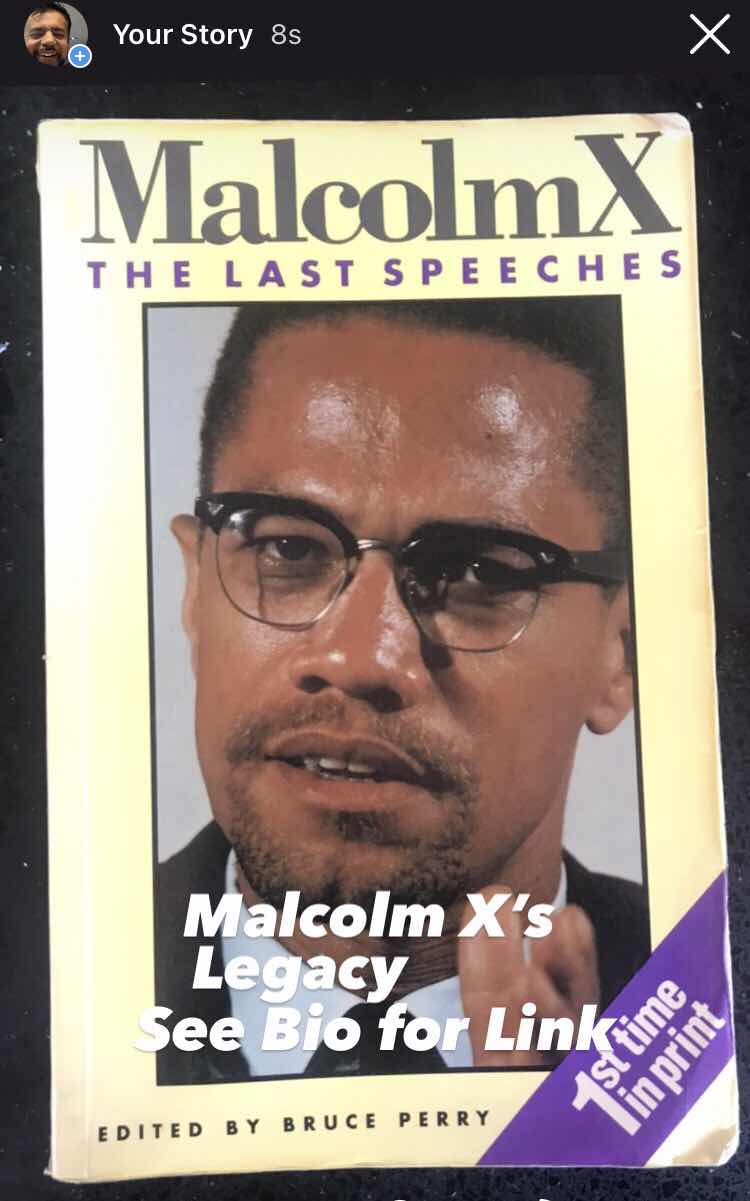
Malcolm X’s Legacy

(this is fully written from memory)


I read Malcolm X’s autobiography at around 19, and it left a deep impression on me that I harbour to this day. 


Alex Haley, in the preface, tells about the first time he met Malcolm- 

That he had a presence about him, that he likened to being in the room with a panther. *1


Malcolm’s story is remarkable precisely because it shows us the power of transformation. 


But this is not a transformation that is directly attributable to belief, rather when you read his autobiography you realise that he was fearless. 


For when he toured US campuses, as a member of the Nation (*2), he had no qualms calling out the White Supremacists for who they were, and that is even within the Deep South. 


And this fearlessness was also present with him during his convulsive youth when he was known as “Detroit Red” for good reason. 


The lesson that I took from his life story, even at my tender age of 18-19, was that God guides those who are fearless. 

Malcolm was a firecracker who listened to his intuition.*3


Recalled to me is a story from Readers Digest from those heady 80-90s days of a black African American son whose father had been murdered by White Supremacists, how when his fathers body was being exhumed for forensic examination- how the boy insisted against all protestations on being present. 

They had justifiably worried that the body would be teaming with worms and decayed beyond recognition. *4


When they opened the cask, the father lay as if he had only that day passed away and been buried. 

Do you think the Shuhudah are only of those who profess?


What of those who believe, but had not the opportunity to profess, and died in the struggle of right against wrong?


And so, Alhamdolillah in my early 20s, I knew who I wanted to be. 

And that fearlessness is not just of brawn and sinew, but is more importantly of the mind. 


That being intelligent, and not being scared to be intelligent, is also part and parcel of being brave, just like Malcolm. 


And so I did not pursue formal certifiable studies of the religion, but left the Most Gracious to guide me- knowing that He guides those who are fearless. *5


And this is directly by His Grace, and not the staid ways of formalism that suck the life blind from the heart of this religion. 


And it is for this reason that I know He will guide Andrew Tate, and neither do I advocate watching his videos or his interviews. For guidance is a process, and not an end in itself. 


And to the Most Gracious is our return. 

And to Him is due all glory and praise. 


Knowledge is sought through fearless pursuit and contemplation. 

Not lectures and formalism. 

But by living life to the utmost, and then allowing yourself to be guided. 


NOTES

*1 Alex Haley wrote Malcolm X’s autobiography from first hand interviews with him. He also famously penned “Roots” which became a land mark series detailing colonisations impact on the African Americans.


*2 the Nation of Islam was as far from traditional Islam as anything could possibly be. 

Muhammed (saw) has the title seal of the Prophets because he was the last to be sent. 

Remarkably Malcolm X fell out with Elijah Mohammed, who had claimed Prophethood. He then visited Mecca on Hajj and found pure Islam where there are no racial barriers. 


The Nation had since inception promulgated the idea of segregation between colours, as a means of the black man realising his true identity. 

Whereas pure Islam advocates all men finding their identity in the worship and service of the Infinitely Gracious. 


*3 in the autobiography he narrates one incident where his intuition told him to drop the piece that he was packing, only a little later to be stopped and searched by the police. 


In Islamic theories of knowledge ilhaam (inspiration) is brother to Wahiy (revelation). 


*4 This is not Malcolm X’s father. 

Although he too was murdered because he was too uppity, when Malcolm was a child. This eventually destroyed the family. 


*5 see the last verse of Ankabut. 

And then read the whole of it. 

Alhamdolillah. 


Thursday, 23 February 2023

Be Part of an Ongoing Charity- Sadaqa Jariyah

*BE PART OF AN ONGOING CHARITY: SADAQAH JARIYAH*


As a group we have young footballers that face an uncertain future. 


We can all give them the certainty to face those challenges with heart, and hope, by helping them to connect with the centres of Islamic faith. 


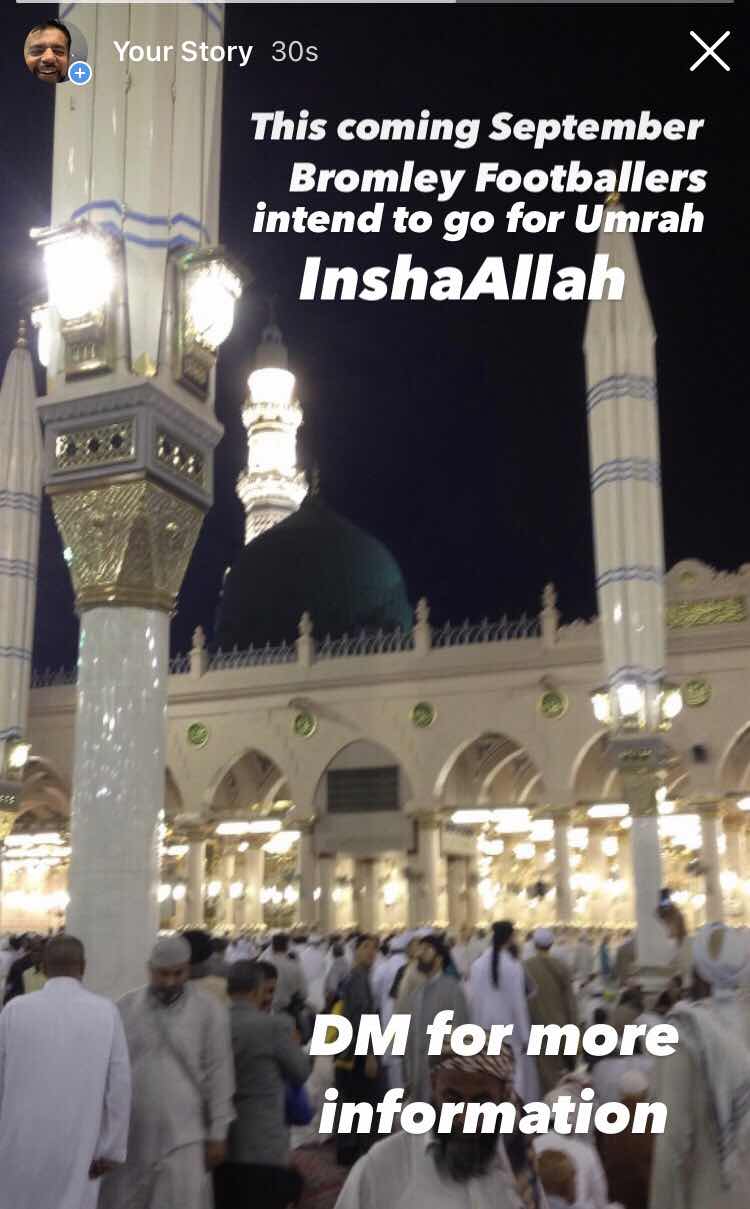
With your help we intend to take a contingent of these young brothers with us for an Umrah trip to Mecca and Medina, to perform the sacred rites. 


Crucially each of those, here, that want to go will be required to give a three-fold commitment:


1- to pay as much as they can afford towards the trip. 

2- to make sincere supplication for their sponsor once there. 

3- & *MOST IMPORTANTLY* to contribute towards this ongoing endeavour, at some future unspecified time, when they have the means to sponsor another young person to likewise go as a group to connect both with our common history and the centre of our World. 


*THE THIRD COMMITMENT*

Is the kernel of an ongoing charity, *Sadaqa Jariyah*. 


Since to be a part of it, both for you and your sponsors, means that the blessing will not stop until Qiyamah, InshaAllah. 

And the Most Gracious blesses us all because of our intention on the occasion that it does not. Ameen. 


*The Specifics*

Available to anyone and everyone here aged 18 and over. 

Under 18 solely accompanied with a full paying, male adult, having parental responsibility. 


We plan to go mid September for one week. Estimated costs around £800 pp. 


InshaAllah we will try and make this an every alternate year event. 

So that our younger brothers, who are presently under 18, can benefit from this in the future. 


*What do you need to do*

1- DM Shafi to say that you are interested. 

2- be willing to take part in a social media campaign to promote this. 

3- make the commitment. 

4- it is envisaged that sponsorship will be specific to you, and your monetary needs. So that your photo and a small video about who you will be made available online. 

(You will only have to say your first name)

5- money will be collected by me using PayPal and I will communicate with your sponsor via email. 

6- we discourage making videos at the Haramain, however we will need to prove to your sponsors that you did in fact visit the holy places and I will make small videos with that intent once there. 


Shafi 

Monday, 6 February 2023

How much should we believe?

The central dilemma that every Muslim faces is how much should you believe?


After all whenever Allah t’ala reminds us of the centrality of prayer to our religion, He likewise reminds us of the requirement to give Charity (Zakah). 


Sacrifice is an essential requirement towards belief. And that in a nutshell is the dilemma that we each face, how much sacrifice is warranted through believing in something that is of the hidden World, that we cannot see, nor behold. 


Islam from outset has always been a rational religion, and we must believe that it is so in it’s entirety. 


But what does it mean for it to be rational and yet appeal to things that we cannot see?


For sure it promotes the acquisition of knowledge, contemplation of truth, and an unbiased application of rules. 


Within its corpus of knowledge, it is full to the brim with fathomless depth, without any contradiction. And it is this fullness that means that it has the answer to all questions that can be posed about it, including those of it’s very own limits. *1


So it should likewise point a way towards the resolution of this dilemma. 


How much should we believe?


The answer lies within a famous Hadith Qudsi, in which God says that if you go towards him a hands breadth He would come towards you and arms length and finishes that if you go towards God walking that He would come towards you running. 


That belief in God is responsive. 


And belief in God is tangible. 


Closeness (to God) is not a feeling, but it is far greater than that. 


Imagine how incredible belief is. 

That the weight of belief is far greater than anything that you could imagine. 


And that God created you (and the whole cosmos) for the sole purpose that you would be able to find Him and then realise that prayer to Him is something that is not just obligated and necessary, but more importantly is something incredibly beautiful. *2


And then He explained to us that true piety and righteousness is to believe in Him, and His angels and His books and His prophets and messengers that He has sent. 


That He is Al-Batin, the One that chooses to remain hidden, and az-Zahir the self evident One, whose reality is so obvious to those that think and ponder. 


And it is because He chooses to remain hidden, that necessitated the Angels as agents of His will. For He is the One, Qawiyyun Aziz, the mighty, the powerful and the One that intervenes. 

And He sends the Angels as Messengers to inform us of His intervention.  

(See Further Study) 


That is the reason that true belief is so precious  and so heavy. 

And that is why sacrifice is so central. 


And then the dilemma fulfils itself in that although belief is other-worldly, sacrifice cannot happen unless you are fully participatory within this World (Hayat ud-Dunya). 


That we each must feel the loss of sacrifice, otherwise it would not be a sacrifice. 


But when you know the reality of things then that is a small price. 

Only the Most Gracious can guide you on that path to fulfilment. 


And part of that path is to realise that struggle against oppression is likewise necessitated. For oppression is the kin of disbelief, whereas true freedom is the brother of belief. 


And the first struggle is with the Quran. 

Seeking to understand it within the light of your lives, allowing it to talk to you and then in responding to its speech.*3


How many of us prefer to be given the answers to that struggle? *4

How many would choose the hard path of not knowing, and then deliberating?


*Knowledge is sought through study and contemplation*

Not lectures, nor this above. 


*1 all things have limits, not least the religion. And not least belief. 

The religion is clear and is the 5 and our rituals. And any addition is a going astray. 

Belief is something much more precious and much more difficult, it is a journey and the guide on that journey is the Quran. 


*2 Another famous Hadith Qudsi. 

“I was a hidden treasure, and so I created that I might be known”. 

And to know that God is both moral and good, necessitated the creation of moral agents that have free will and the capacity to both. 

And then He sent Messengers and Prophets to guide us. 

And books to make us intelligent. 


*3 The current dominant school of thought present within the Muslim Nation is that the Quran is part of Allah t’ala Asma wa Sifaat (His Names and Attributes) and should not be over deliberated upon. 

This in clear contradiction to verses within the Quran that tell you to deliberate. 


*4 this is not Tafseer, which posits answers. But this is reflection, which is by far much greater. 


^FURTHER STUDY*

Contemplate S Hajj from the parable of the fly. 

Read it with Tarteel. 

Find a similar sounding passage in S Hadid (iron). 

Find that one verse in S Hadid that is ambiguous, may you be guided by the Most Gracious to discover its meaning (that is not written anywhere).