The World and Its People
The World that we inhabit contains essentially two types of people. And it is the answer to the question of "who they are?" that determines "who we are?" and our futures.
Because it is the way that we see our World that makes our approach to our lives, and then what we ultimately do and become!
Some concrete examples of how people have answered that fundamental question are:
· Marx/ Stalin who saw a "Rich- Poor" divide.
· Hitler who promoted an "Arian and Semitic" divide.
· And more recently Blair & Bush who have both promoted a "the West, and the Muslim" divide.
The CUP.
But is there not a better way that does not divide the World along anthropological lines?
In fact throughout all types of people, and all times, there is a singular behavioural trait that determines their approach to life. It is the difference between a half full cup and a half empty one.
This means of perception cuts across all divides that divide us by the colour of our skin, or our nationality, or our religions.
And at its root determined how the people reacted to the true Messengers when they came to them; either with arrogance or with humility.
For arrogance is born not of power or wealth, but of a fear of loss of that power and wealth(*1). It is a fear of a possible loss of means, a lack of trust in providence and ultimately a fear that there are things that are out of your control (2).
Moses, Jesus & Muhammad (as).
So it was when Moses (as) came to Pharaoh and Pharaoh feared. He feared an empty cup. That Moses (as) was trying to take what was his Kingship (in the Muslim tradition Moses (as) was the foster brother of Pharaoh). He feared that these were things out of his power. And so he became arrogant and disbelieved.
So it was when Jesus (as) came to the Children of Israel. They feared. They feared that the Kingdom of God was slipping away from the ken of their power and knowledge. They feared the empty cup and they disbelieved.
So it was with Quraish when Muhammad (saw) came to them, they feared. They feared lest their standing amongst the Arabs would be diminished. They feared the empty cup and they became arrogant and disbelieved.
Each of them thought that there Prophets brought with them portents of doom. But their doom belonged with them, and it was their seeing only an empty cup.
In contrast the believing men and women from all of the nations; Judaic, Nazarene and Muslim; saw only the good (*3). And even when they suffered trials and tribulations they only said "This is what GOD, most gracious, has promised us" and it only increased them in patience, in doing good to their fellow man, and in faith.
This was the case of the people to whom the Messengers were sent, and is in point of fact the case of all people, at all times.
The Blessed.
Those that ever see a full, brimming cup. Who take the best, and make the most, even from the worst of times. Who learn knowledge from the ignorant, patience from the impatient, and then share it with all (S. Asr). They are the ones who are blessed, whoever they may be, wherever they may be.
And this sentiment is at once both a Unifying and Uplifting force for the whole of Humanity.
It is a sentiment contained in the timeless words of Muhammad (saw), the Messenger of GOD, "The best of people inside the religion, are the best of people when they are outside of the religion". And "No Arab is superior to a non-Arab" famously said without condition on his farewell pilgrimage. And in his saying that "belief is Yemeni" by which he (saw) meant that civility, being kind and considerate, doing good to the people and making them happy are all aspects of true belief, irrespective of who or what you are.
And it is this unifying and uplifting sentiment that is the cornerstone of Qur’anic commentary. For we are told that when GOD intends to do good to a man or woman "HE expands their chest", causes all that is narrow therein to be extinguished and causes us to see an overflowing cup. And then causes belief to enter therein.
So that even when we are tried in this life with loss of means, or health, or life of us or those whom we love... We cry and we mourn but we do not lose hope, nor do we stop doing the good in the hope of earning HIS good pleasure.
The Muslims.
It is these sentiments that have ever guided the Muslims.
After Badr did they not give to their captives, who had been bent on snuffing them out, bread whilst they ate only dates. A rich man’s food they gave to those who had once tortured them in Mecca, and even then came out to kill them at Badr with a superior force.
Did they not always honour their treaties, irrespective of consequence.
Did they not always incline to Peace, when the other inclined to Peace, in accordance with GOD’s commands contained in the Qur’an. Whilst knowing and accepting that such actions might be strategies and deceptions.
These have ever been the sentiments of the Muslims, at one and the same time, both unifying and uplifting.
Believing in the goodness of people, trusting them and sharing with them the good that they have been given!
For notes see comments...
- Posted using BlogPress from my iPhone
Friday, 18 January 2013


Frankenstein and the Lode-Stone
Mary Shelley's nightmare (Frankenstein) was born of the then Darwinist pomposity that suggested that the "spark" that gives life is none too far away. Today Sci-Fi has recognised the impossibility of trying to play God in those respects, and yet even more pompously advocates a terra-forming gaseous concoction of methane, nitrogen and oxygen as a means of creating the basis for life (Star Trek & the last episode of Dr. Who).
But even then Mary Shelley's work differs from the art form of the now because it can and does remind us of certain wonders of the World and certain enigmas that we hold explained... For example...
To Wonder.
"There, Margaret, the sun is forever visible, its broad disk just skirting the horizon and diffusing a perpetual splendour. . .
What may not be expected in a country of eternal light?
I may there discover the wondrous power which attracts the needle."
There the hero ( ? cos l haven't read that far yet, lol!) was intent on discovering the fabled north-east passage near the Pole and ascertaining the secret of the magnet.
This passage shook me back down the years to school science.
The Secrets of Magnets.
So long ago I had been taught that the secrets of the magnet HAD been explained.
I had "learnt" that to make a magnet, one needed a fresh piece of iron and another magnet. And that all you had to do was to stroke the magnet over the virgin iron.
And we "learnt" that such stroking aligned all of a multitude of smaller magnets contained within the metal so that all their Norths pointed North and all of their Souths pointed South, in concordance with the linear stroking action of the first magnet.
But we never asked... And were never made to Ask or Wonder... (Until I read this masterly work).
1. Where the first magnet came from? (The proverbial Lode Stone, the mother of all magnets.)
2. How there could be such alignment when we could perceive no movement?
3. And what actually causes the magnet/ compass to point Northwards?
When you actually think about it, these things are not explained.
Explaining AWAY.
However they are explained away by allegory; by the backwards and forwards movement of reasoning from what we can see, into what we cannot.
So we examine how magnets and iron behave on our human scale and suppose it to be likewise on a truly global scale. And then we hold that we have done our job, are fully rational creatures and are masters of the Universe.
The theory of magnets is consistent, in that it assumes that reasonable movement from known to unknown.
"What" "We" "Know"?
So we know that if we cut a magnet into a thousand pieces, we get a thousand other magnets, each with their own Norths and Souths.
And we know that if we file a virgin piece of iron to make iron fillings, that these when they are placed near a magnet behave magnetically and when they are placed on a piece of paper trace a "field".
And so we reasonably, and by extension, believe the Earth and its core produce one big magnetic field. That there is no source that pulls the needle, well at least not at the North Pole anyway. If there is a source then it would be at the centre of our Earth.
To Marvel.
But even if that is so, should we still not marvel whenever we see a needle move?
Because we have not explained anything really. All we have done is observed and related one observation to another.
We have not explained the WHYs of the magnet! Only the Whats and the Whens:
All We Know is What happens When...
- We cut a magnet
- We place iron fillings near a magnet
Period. And that is the sum total of our Knowledge.
The Secrets of the Magnet continue to remain elusive.
Because--
Fundamental Questions
All of the fundamental questions that we can ask about our World, being What When Who How & Why, are all relational questions. The first three ask for a snapshot, an instance in time, and the last two seek to connect those instances to enable us to see causal patterns. Of all of them it is "Why" when it is applied to both man & non-man that implies something BEYOND How (a mechanism); it implies a HIDDEN something, whether it be motive or a greater plan!
And once we admit that, then the reality of a hidden World becomes a given.
Once a Why is admitted then reality can never be solely confined to whats, whens, whos and even hows!
"Why" does not however presuppose an irrational hidden World.
Science, just another Story :-)
Furthermore even after our Science, and before our contemplation into what we have achieved, should we not marvel, that such things can be "related to" and that we can do "the relating"?
And that we can construct a story, a causal map of our reality. Is that not what every theory is, just another story?
Except Science is a story with teeth. Teeth chop, rip/tear and grind. Science gives us the questions to probe and ask. And it is this probing that causes us to ask those vital questions that are the body and soul of technology.
Body & Soul, Science & Technology.
Contrarily, the answer to those questions give us little beyond the impetus to ask still more questions. However it is the search for those answers that gives us technology.
Al-Qur'an.
And that is why God in the Qur'an testifies that HE has made the Universe subservient to us. Because it is HE who has given us 2 eyes and a mouth, and a reasoning mind... That we might see, question and "know"!
Shafi
Reading Frankenstein and shivering in my boots.
- Posted using BlogPress from my iPhone
But even then Mary Shelley's work differs from the art form of the now because it can and does remind us of certain wonders of the World and certain enigmas that we hold explained... For example...
To Wonder.
"There, Margaret, the sun is forever visible, its broad disk just skirting the horizon and diffusing a perpetual splendour. . .
What may not be expected in a country of eternal light?
I may there discover the wondrous power which attracts the needle."
There the hero ( ? cos l haven't read that far yet, lol!) was intent on discovering the fabled north-east passage near the Pole and ascertaining the secret of the magnet.
This passage shook me back down the years to school science.
The Secrets of Magnets.
So long ago I had been taught that the secrets of the magnet HAD been explained.
I had "learnt" that to make a magnet, one needed a fresh piece of iron and another magnet. And that all you had to do was to stroke the magnet over the virgin iron.
And we "learnt" that such stroking aligned all of a multitude of smaller magnets contained within the metal so that all their Norths pointed North and all of their Souths pointed South, in concordance with the linear stroking action of the first magnet.
But we never asked... And were never made to Ask or Wonder... (Until I read this masterly work).
1. Where the first magnet came from? (The proverbial Lode Stone, the mother of all magnets.)
2. How there could be such alignment when we could perceive no movement?
3. And what actually causes the magnet/ compass to point Northwards?
When you actually think about it, these things are not explained.
Explaining AWAY.
However they are explained away by allegory; by the backwards and forwards movement of reasoning from what we can see, into what we cannot.
So we examine how magnets and iron behave on our human scale and suppose it to be likewise on a truly global scale. And then we hold that we have done our job, are fully rational creatures and are masters of the Universe.
The theory of magnets is consistent, in that it assumes that reasonable movement from known to unknown.
"What" "We" "Know"?
So we know that if we cut a magnet into a thousand pieces, we get a thousand other magnets, each with their own Norths and Souths.
And we know that if we file a virgin piece of iron to make iron fillings, that these when they are placed near a magnet behave magnetically and when they are placed on a piece of paper trace a "field".
And so we reasonably, and by extension, believe the Earth and its core produce one big magnetic field. That there is no source that pulls the needle, well at least not at the North Pole anyway. If there is a source then it would be at the centre of our Earth.
To Marvel.
But even if that is so, should we still not marvel whenever we see a needle move?
Because we have not explained anything really. All we have done is observed and related one observation to another.
We have not explained the WHYs of the magnet! Only the Whats and the Whens:
All We Know is What happens When...
- We cut a magnet
- We place iron fillings near a magnet
Period. And that is the sum total of our Knowledge.
The Secrets of the Magnet continue to remain elusive.
Because--
Fundamental Questions
All of the fundamental questions that we can ask about our World, being What When Who How & Why, are all relational questions. The first three ask for a snapshot, an instance in time, and the last two seek to connect those instances to enable us to see causal patterns. Of all of them it is "Why" when it is applied to both man & non-man that implies something BEYOND How (a mechanism); it implies a HIDDEN something, whether it be motive or a greater plan!
And once we admit that, then the reality of a hidden World becomes a given.
Once a Why is admitted then reality can never be solely confined to whats, whens, whos and even hows!
"Why" does not however presuppose an irrational hidden World.
Science, just another Story :-)
Furthermore even after our Science, and before our contemplation into what we have achieved, should we not marvel, that such things can be "related to" and that we can do "the relating"?
And that we can construct a story, a causal map of our reality. Is that not what every theory is, just another story?
Except Science is a story with teeth. Teeth chop, rip/tear and grind. Science gives us the questions to probe and ask. And it is this probing that causes us to ask those vital questions that are the body and soul of technology.
Body & Soul, Science & Technology.
Contrarily, the answer to those questions give us little beyond the impetus to ask still more questions. However it is the search for those answers that gives us technology.
Al-Qur'an.
And that is why God in the Qur'an testifies that HE has made the Universe subservient to us. Because it is HE who has given us 2 eyes and a mouth, and a reasoning mind... That we might see, question and "know"!
Shafi
Reading Frankenstein and shivering in my boots.
- Posted using BlogPress from my iPhone
Born a Scientist
A father is uniquely positioned to observe the growth and development of his son. And Ibrahim has provided me with such an opportunity.
I observed him playing and exploring his hands and now I see him discovering his feet. The expression on his face, one of wonder.
How much do we really know when we are born into this World? Off course we forget that once we knew neither our hands nor our feet. And that once we had to discover those very sacred trusts that have we have been vouchsafed.
This impacts little on "Nature or Nurture"; how much of us is what we have been given, and how much what we make of ourselves?
The Cradle.
But it says a lot about knowledge and the quest for it. Muhammad (saw) said that a man, or woman, should seek knowledge from the cradle to the grave.
By this he (saw) emphasized that that search is a life-times endeavour, indeed a mission without end. But this prescription also houses a description of what we were and what we should continue to be.
Just like our Father, Adam (as), who bit into the apple, we too are all born inquisitive. We observe, we learn through experimentation and we acquire knowledge. We are all born Scientists.
Muhammad (saw) also said every child is born a muslim and it is their parents that make them a Jew or Christian. But don't we believe that the first Jews and Christians were muslims, obedient to GOD, until the first rebelled and the second went astray. And isn't it a fact that we who are born Muslims yet learn what it means to be a Muslim from our parents and society.
And so the sense of the word muslim, as it is used here, must be in its operative form being "submission to GOD". However Islam can never be a passive submission, and is ever and always an act of volition. The first choice that we all make is that we choose to cry, to live, to bite that apple. And that first and primary choice is an act of submission and not rebellion.
This is because, we are informed in a hadith qudsi, Allah t'ala (GOD most High) created that HE might be known. And to live, to experience, is the first step on our road to knowledge.
But Islam asks that a man go beyond the Scientist that he is born to be, and that he reflect on all things big and small. (Al-Qur'an ... Have you not considered the Heavens, how WE raised them... And the Earth, how WE spread it out? AND... Verily Allah t'ala (GOD most High) is not ashamed to set forth the parable of a mosquito.)
To bite that Apple?
To seek to know GOD through reflection on HIS creation is indeed a sacred vocation. And in this the Qur'an is truly a guide, for it provides the measure of all knowledge whatever and wherever it may be ("Seek knowledge even as far as China" another Prophetic Hadith tells us).
What Muslims have forgotten over the past couple of centuries is that in order to fulfil the sacred duty of reflection one must first be foremost in acquiring knowledge of creation.
This first knowledge of our World, of the Sciences and myriad other disciplines, is cumulative and transmittable.
Whereas the reflection, that every man needs and must undertake for himself in order to find Truth, is not communicable, nor accumulatable... but only discoverable by and within your own self.
It is truly a unique journey for all who undertake it. A journey without end..but full of meaning.
- Posted using BlogPress from my iPhone
I observed him playing and exploring his hands and now I see him discovering his feet. The expression on his face, one of wonder.
How much do we really know when we are born into this World? Off course we forget that once we knew neither our hands nor our feet. And that once we had to discover those very sacred trusts that have we have been vouchsafed.
This impacts little on "Nature or Nurture"; how much of us is what we have been given, and how much what we make of ourselves?
The Cradle.
But it says a lot about knowledge and the quest for it. Muhammad (saw) said that a man, or woman, should seek knowledge from the cradle to the grave.
By this he (saw) emphasized that that search is a life-times endeavour, indeed a mission without end. But this prescription also houses a description of what we were and what we should continue to be.
Just like our Father, Adam (as), who bit into the apple, we too are all born inquisitive. We observe, we learn through experimentation and we acquire knowledge. We are all born Scientists.
Muhammad (saw) also said every child is born a muslim and it is their parents that make them a Jew or Christian. But don't we believe that the first Jews and Christians were muslims, obedient to GOD, until the first rebelled and the second went astray. And isn't it a fact that we who are born Muslims yet learn what it means to be a Muslim from our parents and society.
And so the sense of the word muslim, as it is used here, must be in its operative form being "submission to GOD". However Islam can never be a passive submission, and is ever and always an act of volition. The first choice that we all make is that we choose to cry, to live, to bite that apple. And that first and primary choice is an act of submission and not rebellion.
This is because, we are informed in a hadith qudsi, Allah t'ala (GOD most High) created that HE might be known. And to live, to experience, is the first step on our road to knowledge.
But Islam asks that a man go beyond the Scientist that he is born to be, and that he reflect on all things big and small. (Al-Qur'an ... Have you not considered the Heavens, how WE raised them... And the Earth, how WE spread it out? AND... Verily Allah t'ala (GOD most High) is not ashamed to set forth the parable of a mosquito.)
To bite that Apple?
To seek to know GOD through reflection on HIS creation is indeed a sacred vocation. And in this the Qur'an is truly a guide, for it provides the measure of all knowledge whatever and wherever it may be ("Seek knowledge even as far as China" another Prophetic Hadith tells us).
What Muslims have forgotten over the past couple of centuries is that in order to fulfil the sacred duty of reflection one must first be foremost in acquiring knowledge of creation.
This first knowledge of our World, of the Sciences and myriad other disciplines, is cumulative and transmittable.
Whereas the reflection, that every man needs and must undertake for himself in order to find Truth, is not communicable, nor accumulatable... but only discoverable by and within your own self.
It is truly a unique journey for all who undertake it. A journey without end..but full of meaning.
- Posted using BlogPress from my iPhone
Colonialism, Orientalism and the Significant Other.
Colonialism, Orientalism
and the Significant Other.
Reading Edward Said's celebrated work on Orientalism, by that name, leaves a believer thinking on the malaise both now and before that allowed such a thing to happen.
Off course Muslims and Islam are the significant other that deserve study, but Orientalists have always done so with little to no respect for either.
Being brought up stradling both East and West leaves me wondering at how a system of thought as deep as Islam could be swept away by one as shallow as everything propounded by the West. For even as Descartes observed everything propounded by the West is at once disputed by the West. They do not know, cannot know and futhermore believe that this anarchy ,of a type, is their greatest virtue.
In the words of the Qur'an, are the seeing and the blind equal? Are the ones who know, and those who dispute comparable?
But then the problem of how we came to be colonialised and conquered, instead of disappearing in a mire of self conceipt and gloating, should become all the more disturbing.
For to be dominated by such unashmed not-knowing shallowness must mean that we have become shallower still. That our knowledge and the knowledge of our brightest Scholarly Stars is but paper thin. For as the historically verefied dictum states "knowledge is power". We are powerless because of our lack of knowledge and more importantly because of our lack of understanding of what knowledge is.
Most of us believe that all good and usefull knowledge is Qur'an and Sunnah, even whilst Allah t'ala disdains not in making a gnat a parable for us. And even our contemporary thinkers, such a Ziauddin Sardar, see the islamization of knowledge at roots as being an undermining of Islamic ideals.
That is not to say that the Islamization of Knowledge movement has no faults. Rather when Allah t'ala took a gnat as an example of the perfection of the signs (or proofs) within creation it was, and should continue to be, for us all an example of how ALL knowledge is GOD's knowledge, and is and should be our knowledge.
For as with all work started with the words of dedication, so to with all knowledge begun with the BasmaAllah, all is sacred devotion. And that is even the case where it's usefullness might be called into question, for why else would Allah t'ala use the least of things to teach us what is holy and what is not?
The aquisition of all Worldly Knowledge is not a thing to be Islamicised, for it is already Holy.
And it is because of this, among many other erreonous concepts that pertain to what knowledge is and what are it's functions, that I blog in that field. Because it is the theories of knowledge that underpin all that is not well with us now, and yet underpinned all that was great about us before.
- Posted using BlogPress from my iPhone
and the Significant Other.
Reading Edward Said's celebrated work on Orientalism, by that name, leaves a believer thinking on the malaise both now and before that allowed such a thing to happen.
Off course Muslims and Islam are the significant other that deserve study, but Orientalists have always done so with little to no respect for either.
Being brought up stradling both East and West leaves me wondering at how a system of thought as deep as Islam could be swept away by one as shallow as everything propounded by the West. For even as Descartes observed everything propounded by the West is at once disputed by the West. They do not know, cannot know and futhermore believe that this anarchy ,of a type, is their greatest virtue.
In the words of the Qur'an, are the seeing and the blind equal? Are the ones who know, and those who dispute comparable?
But then the problem of how we came to be colonialised and conquered, instead of disappearing in a mire of self conceipt and gloating, should become all the more disturbing.
For to be dominated by such unashmed not-knowing shallowness must mean that we have become shallower still. That our knowledge and the knowledge of our brightest Scholarly Stars is but paper thin. For as the historically verefied dictum states "knowledge is power". We are powerless because of our lack of knowledge and more importantly because of our lack of understanding of what knowledge is.
Most of us believe that all good and usefull knowledge is Qur'an and Sunnah, even whilst Allah t'ala disdains not in making a gnat a parable for us. And even our contemporary thinkers, such a Ziauddin Sardar, see the islamization of knowledge at roots as being an undermining of Islamic ideals.
That is not to say that the Islamization of Knowledge movement has no faults. Rather when Allah t'ala took a gnat as an example of the perfection of the signs (or proofs) within creation it was, and should continue to be, for us all an example of how ALL knowledge is GOD's knowledge, and is and should be our knowledge.
For as with all work started with the words of dedication, so to with all knowledge begun with the BasmaAllah, all is sacred devotion. And that is even the case where it's usefullness might be called into question, for why else would Allah t'ala use the least of things to teach us what is holy and what is not?
The aquisition of all Worldly Knowledge is not a thing to be Islamicised, for it is already Holy.
And it is because of this, among many other erreonous concepts that pertain to what knowledge is and what are it's functions, that I blog in that field. Because it is the theories of knowledge that underpin all that is not well with us now, and yet underpinned all that was great about us before.
- Posted using BlogPress from my iPhone
The Right of Ascension, a Hereditary Problem
Apaloosa, Kings & Islam
Yesterday I was in the mood for a Western, so I watched Apaloosa. It's funny how the genre has moved on from being completely absurd (John Wayne, who I can't stand) to being absurdly realistic.
The Spaghetti Westerns, personified by "The Good, The Bad and The Ugly", are classics on three fronts: their score, the close-ups and the long drawn out silences. The imagery is one of solitude, and that imagery continues throughout the genre.
At the frontiers, of absolutely anything, you must be prepared to go it alone. But then whether you achieve, or not, depends on the slow movement of civilization. And it is that system of organization that is necessary, both for your survival and your posterity (that which you leave behind after you have gone).
Clash of Civilizations?
Of course the civilization I talk of here is not one of absolutes, or norms.
And so that frontier, there, was not one of Civilization versus Non-Civilization. And that the Western Civilization eventually destroyed the Native Indian Civilization, does not mean that it was necessarily any better. But in order to effect the destruction of another Civilization it is imperative to create chaos and lawlessness, so your claim of superiority might better be believed. And that was the Wild West.
And maybe we are seeing that same dynamic in action in Baghdad, Kabul and now Pakistan; the onslaught of one Civilization against another.
But then maybe, just maybe, the real frontier is someplace else. Maybe that frontier is in this blog that I pen.
This because Islam is not a place, but a most powerful and relevant ideal.
But what, I hear you ask, has this all to do with Kings and Islam?
Kingships.
In Apaloosa in order to deal with the lawlessness of the frontier, the people were forced to give over the right to make LAW to a hired hand. The PEACE-maker, as he called himself, came with a ready solution. He held in his hand a document that once signed into statute, allowed him to become the LAW.
Ibn Khaldun, the first analytical historian, argued that that Royal Authority, to become the Law and make War or Peace, is a function of the measure of bonding between a people (Assabiyah) and hence their needs. For adversity, normally, causes people to rediscover their commonality and ignore their differences.
And just as in Apaloosa, I can well imagine a time when banditry and lawlessness were the order of the day, and where every man, family, town and city was forced to seek shelter and normality in Kingship.
And so at the beginning the common need for security drove people to make Kings. But Kingship is unnatural. A King cannot be free, but of a necessity has to be bound by convention. Every King of Men is a King on the proviso that the people maintain him as such. The taller the tree, the harder the fall. And so a King’s continuous pre-occupation must always be the maintenance of his authority, so that it might not vanish. And then of course Absolute Power corrupts Absolutely.
Thus every King of Men is crushed between one of two extremes: the ability to fulfill his every whim, and the desperate need to maintain his standing both for himself and his posterity.
In Apaloosa we see the absurdity of that conundrum come into play.
And Ibn Khalid noted the temporariness of Kingships in the Maghreb; that in general they lasted but three generations. Whereas other un-natural Kingships are shorn up by convention, in our Muslim lands our GOD-given conventions make poor ground for Kingships.
The Natural Way.
This because of our Deen-al-Fitra.
For Muslims call their faith "Deen al-Fitra", the way of man's natural inclination, and usually explain this with reference to man's inward and psychological life. That to worship is a natural element of what it means to be a man, and that then the sole remaining question is who deserves to be worshiped? One who is deaf, dumb, blind and in need, or the ONE who is free from all needs, sees, hears and knows all? Truly the ONE who deserves is the Creator, the Able, the Living, the Ever-Living.
But surely we all also know that man is a sociable creature. And that thus it is natural that we would want to organize ourselves in a way that adds to that natural sociability. Therefore an aspect of our religion being "Deen al-Fitra" must encompass the means of our Social and hence Political organization.
And the most fundamental matter in respect of all Political Authority is the matter of succession.
And this matter must have been especially urgent for our Prophet (saw), most especially because of his foretelling of all the problems that would come upon his Nation following his departure from this World.
The end of Kingdoms.
And with the coming of Muhammad (saw) Kingship ended.
Such portents were evident in the first years of the Meccan period when Quraish offered up Kingship to Muhammad (saw), on condition of his abandonment of the ONE God. His (saw) refusal was the first indication in his life that he was sent to abolish Kingships.
And then later on in the late Meccan period ALLAH t’ala revealed HIS direct Kingship of not just the Heavens but most importantly of the Earth and ALL on it and ALL in it and ALL between them (Heaven and Earth).
And still later in the early Medinan period ALLAH t’ala revealed to us Man’s stewardship over the Earth and all on it. Those verses reveal a time at the very beginning of archetypal Man’s Creation (Nabi Adam (as)) when ALLAH t’ala designed our creation and thereafter when HE empowered us with the knowledge of Words (S. Baqara).
Thus what was portended in Muhammad (saw)’s refusal of the Quraishi Kingship, was fulfilled in the Words of ALLAH t’ala where HE gave over to us the sacred trust of our World. That Kingship ended, and all ownership became the calling, of all of us, to account at the appointed time, on the Day of Truth. And all LAW became the Sacred Law, and its fulfillment and application, through interpretation, for the betterment of all of us.
The Rights of Succession.
And when Muhammad (saw) said "Obey those placed in authority over you" he did not mean, as many people misrepresent, "Do not rock the boat". For that was an argument of the Kings before him, and also of the Kings that came after him, that theirs was a GOD given authority.
Nor did he (saw) mean the rule of the Imams, for critically examining “Choose the one who best knows the Qur’an” will cause you to realize it’s specificity as opposed to its generality.
For did not Khalid bin Walid (ra) lead Abu Ubaydullah bin al-Jarrah (ra) whilst they both were in Khalid’s army? Evidently they understood it to mean “Choose the one who best knows the Qur’an” when no designated leader is available or present. Our Imams may be the inheritors of the Prophets in Knowledge, but not of their political authority.
However, Muhammad (saw) did teach us that "The Leader of a People is the one who best serves them."
In the instance of the urgency of a multitude of problems, to have left without specifying a successor in all but extremely vague terms can only mean that Muhammad (saw) wished the people to choose their leader for themselves.
A Great Legacy.
And so by these tokens the people were empowered to appoint leaders unto themselves, on the proviso that those leaders would seek to fulfill Mans obligations to ALLAH t’ala (GOD, Most High) (the fardh of the true religion) and then secondarily fulfill man’s obligation to his fellow man (enact justice), and then to do good to the people.
This most perfect form of social organization found expression in the Medina of our Prophet (saw) where every man and woman, irrespective of social status, was given the right to extend protection to whomsoever they wished on the proviso that those so protected would not seek to harm any other member of Medina. The power to make and declare PEACE traditionally lay with a King, and Muhammad (saw) extended that power of PEACE to every man and woman irrespective. Not for naught is this the religion of PEACE.
And not for naught is Islam known as the true religion of Democracy.
The rule of Enlightened Philosopher Kings as advocated by the Greek Philosophers, or Marcus Aerulius (Roman Emperor), was not for Muhammad (saw). Nor was the rule for any Imam or Religious Leader. Rather for Muhammad (saw) the rule to enact GOD’s way was for those who do good to the people and those who are chosen by them.
Muhammad (saw) must, at the very least, be credited with the creation of an open / vibrant society that took the whole World out of the dark ages. And that empowered every individual with the means to work for our collective betterment, all of us. A truly open and free society.
May ALLAH t’ala reward Muhammad (saw) abundantly, for but for him we would never have believed. I bear witness that there is no god but ALLAH t’ala, and I bear witness that Muhammad (saw) is HIS true Messenger and Prophet, who fulfilled that which he was obliged to fulfill, who delivered the True Message even unto us down through the centuries. Ameen.
- Posted using BlogPress from my iPhone
Yesterday I was in the mood for a Western, so I watched Apaloosa. It's funny how the genre has moved on from being completely absurd (John Wayne, who I can't stand) to being absurdly realistic.
The Spaghetti Westerns, personified by "The Good, The Bad and The Ugly", are classics on three fronts: their score, the close-ups and the long drawn out silences. The imagery is one of solitude, and that imagery continues throughout the genre.
At the frontiers, of absolutely anything, you must be prepared to go it alone. But then whether you achieve, or not, depends on the slow movement of civilization. And it is that system of organization that is necessary, both for your survival and your posterity (that which you leave behind after you have gone).
Clash of Civilizations?
Of course the civilization I talk of here is not one of absolutes, or norms.
And so that frontier, there, was not one of Civilization versus Non-Civilization. And that the Western Civilization eventually destroyed the Native Indian Civilization, does not mean that it was necessarily any better. But in order to effect the destruction of another Civilization it is imperative to create chaos and lawlessness, so your claim of superiority might better be believed. And that was the Wild West.
And maybe we are seeing that same dynamic in action in Baghdad, Kabul and now Pakistan; the onslaught of one Civilization against another.
But then maybe, just maybe, the real frontier is someplace else. Maybe that frontier is in this blog that I pen.
This because Islam is not a place, but a most powerful and relevant ideal.
But what, I hear you ask, has this all to do with Kings and Islam?
Kingships.
In Apaloosa in order to deal with the lawlessness of the frontier, the people were forced to give over the right to make LAW to a hired hand. The PEACE-maker, as he called himself, came with a ready solution. He held in his hand a document that once signed into statute, allowed him to become the LAW.
Ibn Khaldun, the first analytical historian, argued that that Royal Authority, to become the Law and make War or Peace, is a function of the measure of bonding between a people (Assabiyah) and hence their needs. For adversity, normally, causes people to rediscover their commonality and ignore their differences.
And just as in Apaloosa, I can well imagine a time when banditry and lawlessness were the order of the day, and where every man, family, town and city was forced to seek shelter and normality in Kingship.
And so at the beginning the common need for security drove people to make Kings. But Kingship is unnatural. A King cannot be free, but of a necessity has to be bound by convention. Every King of Men is a King on the proviso that the people maintain him as such. The taller the tree, the harder the fall. And so a King’s continuous pre-occupation must always be the maintenance of his authority, so that it might not vanish. And then of course Absolute Power corrupts Absolutely.
Thus every King of Men is crushed between one of two extremes: the ability to fulfill his every whim, and the desperate need to maintain his standing both for himself and his posterity.
In Apaloosa we see the absurdity of that conundrum come into play.
And Ibn Khalid noted the temporariness of Kingships in the Maghreb; that in general they lasted but three generations. Whereas other un-natural Kingships are shorn up by convention, in our Muslim lands our GOD-given conventions make poor ground for Kingships.
The Natural Way.
This because of our Deen-al-Fitra.
For Muslims call their faith "Deen al-Fitra", the way of man's natural inclination, and usually explain this with reference to man's inward and psychological life. That to worship is a natural element of what it means to be a man, and that then the sole remaining question is who deserves to be worshiped? One who is deaf, dumb, blind and in need, or the ONE who is free from all needs, sees, hears and knows all? Truly the ONE who deserves is the Creator, the Able, the Living, the Ever-Living.
But surely we all also know that man is a sociable creature. And that thus it is natural that we would want to organize ourselves in a way that adds to that natural sociability. Therefore an aspect of our religion being "Deen al-Fitra" must encompass the means of our Social and hence Political organization.
And the most fundamental matter in respect of all Political Authority is the matter of succession.
And this matter must have been especially urgent for our Prophet (saw), most especially because of his foretelling of all the problems that would come upon his Nation following his departure from this World.
The end of Kingdoms.
And with the coming of Muhammad (saw) Kingship ended.
Such portents were evident in the first years of the Meccan period when Quraish offered up Kingship to Muhammad (saw), on condition of his abandonment of the ONE God. His (saw) refusal was the first indication in his life that he was sent to abolish Kingships.
And then later on in the late Meccan period ALLAH t’ala revealed HIS direct Kingship of not just the Heavens but most importantly of the Earth and ALL on it and ALL in it and ALL between them (Heaven and Earth).
And still later in the early Medinan period ALLAH t’ala revealed to us Man’s stewardship over the Earth and all on it. Those verses reveal a time at the very beginning of archetypal Man’s Creation (Nabi Adam (as)) when ALLAH t’ala designed our creation and thereafter when HE empowered us with the knowledge of Words (S. Baqara).
Thus what was portended in Muhammad (saw)’s refusal of the Quraishi Kingship, was fulfilled in the Words of ALLAH t’ala where HE gave over to us the sacred trust of our World. That Kingship ended, and all ownership became the calling, of all of us, to account at the appointed time, on the Day of Truth. And all LAW became the Sacred Law, and its fulfillment and application, through interpretation, for the betterment of all of us.
The Rights of Succession.
And when Muhammad (saw) said "Obey those placed in authority over you" he did not mean, as many people misrepresent, "Do not rock the boat". For that was an argument of the Kings before him, and also of the Kings that came after him, that theirs was a GOD given authority.
Nor did he (saw) mean the rule of the Imams, for critically examining “Choose the one who best knows the Qur’an” will cause you to realize it’s specificity as opposed to its generality.
For did not Khalid bin Walid (ra) lead Abu Ubaydullah bin al-Jarrah (ra) whilst they both were in Khalid’s army? Evidently they understood it to mean “Choose the one who best knows the Qur’an” when no designated leader is available or present. Our Imams may be the inheritors of the Prophets in Knowledge, but not of their political authority.
However, Muhammad (saw) did teach us that "The Leader of a People is the one who best serves them."
In the instance of the urgency of a multitude of problems, to have left without specifying a successor in all but extremely vague terms can only mean that Muhammad (saw) wished the people to choose their leader for themselves.
A Great Legacy.
And so by these tokens the people were empowered to appoint leaders unto themselves, on the proviso that those leaders would seek to fulfill Mans obligations to ALLAH t’ala (GOD, Most High) (the fardh of the true religion) and then secondarily fulfill man’s obligation to his fellow man (enact justice), and then to do good to the people.
This most perfect form of social organization found expression in the Medina of our Prophet (saw) where every man and woman, irrespective of social status, was given the right to extend protection to whomsoever they wished on the proviso that those so protected would not seek to harm any other member of Medina. The power to make and declare PEACE traditionally lay with a King, and Muhammad (saw) extended that power of PEACE to every man and woman irrespective. Not for naught is this the religion of PEACE.
And not for naught is Islam known as the true religion of Democracy.
The rule of Enlightened Philosopher Kings as advocated by the Greek Philosophers, or Marcus Aerulius (Roman Emperor), was not for Muhammad (saw). Nor was the rule for any Imam or Religious Leader. Rather for Muhammad (saw) the rule to enact GOD’s way was for those who do good to the people and those who are chosen by them.
Muhammad (saw) must, at the very least, be credited with the creation of an open / vibrant society that took the whole World out of the dark ages. And that empowered every individual with the means to work for our collective betterment, all of us. A truly open and free society.
May ALLAH t’ala reward Muhammad (saw) abundantly, for but for him we would never have believed. I bear witness that there is no god but ALLAH t’ala, and I bear witness that Muhammad (saw) is HIS true Messenger and Prophet, who fulfilled that which he was obliged to fulfill, who delivered the True Message even unto us down through the centuries. Ameen.
- Posted using BlogPress from my iPhone
Friday, 21 December 2012
When Denial of Shirk (multiplicity of gods) becomes an Oppression!
When Denial of Shirk (multiplicity of gods) becomes an Oppression!
In the Qur'an we learn of the sage Luqman's (alay his-salaam) bequest to his children, "Indeed Shirk (the association of others with GOD) is the greatest of Oppressions".
For it is an oppression against your own self since GOD had taken the oath from you when you were but atoms issued from the loins of Adam (as), at the beginnings of our creation (Surah Araf).
It is an oppression against the whole of mankind, since without the recognition of a transcendental singular GOD, who can conceive and put into action a Universal Justice.
(http://shafeesthoughts.blogspot.co.uk/2011/07/fallacy-of-shirk-polytheism-agnosticism_07.html?m=1)
And it is an oppression against the whole of Creation that cries out against and only bears man's insolence because the command of
GOD preceded and took precedence over it.
However even given all that, we live in a singular time when those who make it their primary business to deny Shirk (the multiplicity of gods) have become the greatest oppression against us.
For the people I speak of may well be my brothers is religion, but that should only encourage me to stop them when they err.
They are those who believe themselves to be the blessed, the guided, the Ahl ul Sunnah wa'l Jamat. Are we not all?
But these particular ones hold three fold program that they believe purifies them above all others.
That program consists of the
affirmation of the primacy of the Qur'an and Sunnah, the fear of Biddah (innovation), and the denial of Shirk.
In reality, all in reverse order.
And it is this misplaced and indeed over-emphasis on Shirk denial that is the root cause of their oppression on us.
For Muhammad (saw) said of us, being his Ummah, that he feared not for us to revert back to Shirk, but for us to become neglectful of our minor duties and responsibilities that men hold over men. And so it has been throughout our ages that the five rights that GOD holds over us
have never been neglected, save possibly one.
And that one whilst it is GOD's
right, and our duty to perform in obedience to HIM, it is the one whose benefit to others is abundantly clear.
It is the Zakat; the right that the poor, needy and traveller hold over us through GOD's grace.
The portent of Muhammad (saw)
is true, that whilst we uphold those things we neglect the right of a brother over a brother; the salaam, the overlooking of errors, and when they can't be overlooked then the consideration of excuses, and the brotherly goodness in all that it entails.
And it is these people in their pursuit of the denial of Shirk that run roughshod over our rights.
For they do not understand that the denial of Shirk does not of itself lend one to belief.
Whilst the accursed devil recognised the supremacy of God, he failed in his submission to HIM. And even supplicated for an everlasting life that he might lay in wait for the children of Adam on every highway and pass.
The Cornerstone of Belief.
The denial of Shirk is not the cornerstone of our belief.
Rather it is the doing of good; the smile, the social acts, and the upholding of all that is right and the fight against all that is wrong.
For Muhammad (saw) told us as much when he said that belief has seventy branches and the least of it is the removal of harm from the paths that men walk.
And not the denial, nor the rail, against Shirk.
And it is this over-emphasis on the thing that Muhammad (saw) under-emphasised for us that have visited a great oppression on the Ummah of Rasulullah.
Our HERITAGE.
For the house of al-Saud, and their ideology of
the ahlul-sunnah, has destroyed and continues to destroy our heritage: the
places that witnessed a phenomenal time that was the Prophet's life.
Where another would keep historical sites and use
them as a means of education for the people, they un-keep them, destroy them
and ignore them.
A very precious heritage on the verge of being
lost, because they fear that which Muhammad (saw) did not fear.
And even if they were right in regard to the few,
why squander for the many, that which would greatly benefit us all.
Saturday, 10 November 2012
Reasonable Belief v/s Unreasonable SCIENCE: From Nothingness to Creation in 3 easy steps.
PREAMBLE
I believe in Creation, and in an intent, and will, that Created.
I believe in a Sustainer, a Provider and a Giver above all.
I do not hold that a proof of my belief necessarily exist in this life.
Nor that a proof is even desirable.
But what I do hold is that it is REASONABLE to believe, and unreasonable to not.
When we come to ideas on the coming into existence of existence itself, we often come down to an argument of a thing becoming from nothing.
Whilst we would be hard put to to empirically show such an event, the fact that we can conceive of it means that the idea must be entertained.
The first modern Scientific postulate of an unobservable object, following on from Einstein's general theory, were the aptly named Black Holes. Until that is a clever dick showed that there would even be a radiation emitted from those esoteric cosmological oddities caused by the spontaneous eruption of mirror particles on the Black Hole's event horizon.
It would seem then that even things that we presume are unobservable, are in fact observable, only you need to know where to look and what for.
The Qur'an in its first stanza lays a clear foundation:
1-That is the BOOK without doubt.
(A place to look).
2-A guide to the humble.
3- Those who believe in the unseen, who establish prayer and spend out if what WE have bestowed upon them (of their wealth to the poor and needy).
The first characteristic for those seeking guidance is humility in the sight of something higher than yourself.
The second clarifies the first; true and lasting humility comes only to those who believe in an unseen World.
Thereafter the Quran guides us in the application of those things, but at outset it differentiates the Muslims as being those who believe in an Unseen World.
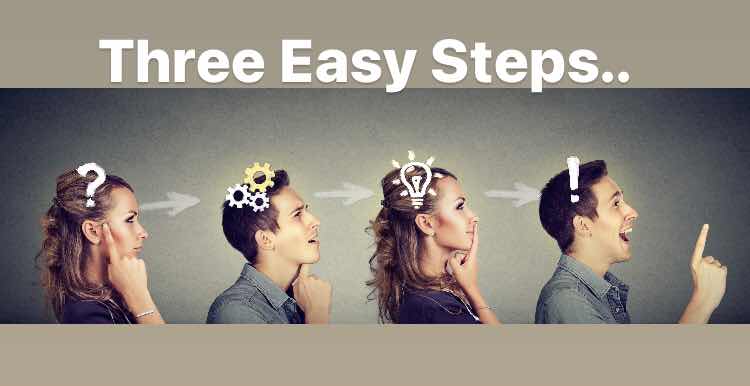
ARGUMENT 1-
Then it would be reasonable to say that a man either-
1- believes in an Unseen World, or
2-believes that the World is all that can be seen, or all that he can see and observe.
In case 1, the person in question would have no trouble conceiving of something coming from nothing, and the Quran follows this with guidance sure.
That such people should examine the root of all Books that came before, the original teachers and not their followers.
For there they will find the purity of monotheism that only today resides within Muslim beliefs.
ARGUMENT 2
In the case of 2, such a man, being an empiricist, cannot conceive of nothingness since nothingness is by its very definition unobservable.
And if he did then surely he would not remain true to his principle.
For it is unobservable, and hence impossible.
Or he says that there always was a thing; an infinite regression of things.
But since he is a finite empiricist, not in an infinite number of lifetimes, will he be able to observe a thing without a beginning.
He will never be able to show with any degree of certainty a thing without a beginning.
Both of which he would be hard put to observe; something coming from nothing, or an everlasting thing.
In fact for an empiricist, a true materialist, explaining existence is a conundrum which will only bring them grief.
Their ideas fail and contradict.
Their only recourse is to deny their principle on the greatest of questions.
Now tell me, who off the two is more reasonable?
The one who believes in an unseen World and that a thing can become from Nothing, or the one who says that all that there is, is all that can be seen, and then conjures something coming from nothing, or conjures an unobservable infinite series of beginnings, neither of which he can observe.
ARGUMENT 3
And there you have a contradiction, between his principle and what he'd have to admit.
Such a man falls in his principle and in his methodology for by attempting to lay claim to the greatest question that mankind has posed of himself; the question if origin; he has admitted his need for those things that he cannot observe.
Or if he were to hold true to his methodology, and his principle, then he would be forced to discount and ignore the ultimate question of origin.
Yes he might pander around its limits, but never could he address the essence of the thing.
And such a man would be incomplete.
For it is the nature of all men, who would be whole, to question their origin.
And GOD is the best of Judges, WHO will repay all in full those who lie and fail to be true to themselves.
Shafeesthoughts.
- Posted using BlogPress from my iPhone
Location:London
Subscribe to:
Posts (Atom)