Thursday, 27 May 2021

The Limits of the Hadith Sciences and the Heart of the Quran

“Every field of knowledge has its limitations, just as the Messenger (saw) was eager to ensure that we knew that even the religion has its limits”. 


The remit of a Scholar of Hadith is that they know the isnad, the chain of transmission from one generation to the next, and can critically appraise it. 


Often since their remit is not to examine the internal consistency of Hadith, nor it’s external consistency, nor look past its isnad, they do not do so. 

And in not doing so they miss much. 


It would be beneficial to look at a specific example to bring this point home to you. 


For some of them say that the Hadith, in which the Messenger (saw) calls Surah Ya Sin the heart of the Quran, is weak. And yet it is culturally significant in that many of us have taken that Hadith to heart. 


Some even go so far as to say it is fabricated. 


But they do so by only examining it’s isnad. 


The chain of narration could have be broken with a missing link, or even one such individual that they considered untrustworthy, could have this one time narrated it correctly, and it could be a true saying of the Messenger (saw). 


Except one that is not verifiably true by the exacting standards of the Hadith Sciences. *3


Furthermore it’s not like the narration is critical to our understanding of the religion.  


And so let’s look at this particular Hadith a little more carefully, and a little more in depth. 


Either the Messenger (saw) was referring to the position of YaSin within the Quran or he was referring to its standing within the Quran.  


Yasin does not sit half way in our Qurans. 

And so it must refer to its standing with respect to the Quran, and the effect it has on it’s people.


Figuratively the heart moves us to action and enervates us. When we say something is the heart, we emphasise it’s desirability. 


Now read Yasin keeping that meaning in mind, and see if you can decipher the class of people it is meant to move to action. 


Here you will need a rudimentary understanding of the Seerah, of the classes people to whom the Messenger (saw) was sent. (*1)


Now imagine that you are one of those class of people, and read it as if it were talking directly to you. Does it not move you?


And would it not move you to incredible feats of endurance and sacrifice?


Not because the argument appeals to your intellect. But because it appeals fully to your heart. *2


And that it did indeed move that class of people to an incredible and unprecedented action, that forever changed the course of the World’s collective history, cannot be doubted. 


So that when we look at it now we do not need to know that it’s isnad is not intact. 

It’s truth is self evident. 


It’s interesting to note that many scholars of hadeeth narration, notable amongst them an-Nawawi, collected forty hadeeth. 


They did this in accordance with another saying of the Messenger (saw) in which he said that one who transmits forty Hadith from him would attain the class of one who understands the religion. 


Now take your time to contemplate that. 

There are two beautiful gems that can be gleaned from that saying. 


First we know that Allah t’ala is One and loves the odd (another well known Hadith). And that very often in our corpus of knowledge seven, seventy and seven hundred are numbers that are equated with the symbolism of a great many or a great quantity. 


But here in this one transmission that lauds transmission itself, the Messenger (saw) stops short of seventy. 


It is as if he is telling us that it’s not the quantity of Hadith that you learn and then transmit, but it is the quality of understanding, that really matters. 


And then this truth is brought home by the next line. That one who does so attains the  level of one who understands the religion. 


And that therefore the one that understands the religion is at a higher level than the one that transmits.  


A truth that the Messenger (saw) hinted at the farewell pilgrimage in front of many thousands - those that are here tell those that absent, perchance they may be the ones that better understand. 


The mother of Islamic Sciences is Tafsir ul Quran, and deliberating on that alongside the Seerah of the Messenger (saw) - per chance Allah t’ala might bless you, and us all, with understanding. 


Knowledge is sought through study and contemplation. Not through lectures nor talks, nor this above. 

Friday, 14 May 2021

Tafseer ul Quran In the Style of Abu Haneefa (rh)*


This group intends to progress through the Seerah and use it as a structuring element in our approach to the Quran. 


And for everyone within it to have a unique portfolio that they must endeavour to bring to our common table. 


*PORTFOLIOs*


1- the language used, unusual words or different meanings, and imagery (Qutb’s work). Especially where the exegetes translate a word in a way other than in its evident meaning, as they cannot understand it within it’s textual context. (Taking a figurative approach: vis a vis Tariq). 


2- how parts of the passage are used in deliberations on fiqh issues from any of the schools of thought. And what bearing they had on ethical deliberations. 


3- classical tafseer- what the classical tafseers say if anything unusual. 


4- tafseer al Quran bil Quran, relevant other passages from the Quran that can shed light on it. And it’s position within the Quran, within which Surah (the context of its’ arguments) and the surrounding Surahs. 


5- the seerah, occasion of revelation and sociological perspectives on the effect it had on the community of believers. 


6- relevant Hadith that have a bearing on it. 


7- theological and esoterical perspectives that pertain to it. 


Each person participating will need to take a unique portfolio in one of the above. 

They should endeavour in the long term to try and become lay-experts in those fields. 


If more than five other participants join the group, then their voices and opinions will only be heard through one of the lead six. 

And each of the lead six can form their own groups to deliberate on their separate fields, separate from the main group. 

The lead six will automatically become Admins of the group. 


*MY ROLE*

We will progress in the Quranic (also known as the Socratic) method of posing questions and then deliberating on, and forming answers to those questions. 


I will act as chair, and bring together everyone in fortnightly slots via Zoom meetings. On the first of each couple of nights, I will lay out interesting and pertaining questions. 


We will all read the passage together in its Arabic and original form, taking turns, and also peruse different translations. This before the second of the two sessions. 


The first of the two will be to whet everyone’s appetite, and anyone can say anything as in a generalised discussions. 

On the second of the two meetings, each lay expert will be asked for more details concerning their field and what is says about the passage.


I will take on the portfolios of 5 and 7 as per above. And invite other people to join and take on the remaining roles as per their want. 


*STUDY and CONTEMPLATION*

Knowledge is about deliberating and making connections between different pieces of information. 


In the second of the two meetings I hope we will see generative thought that makes those connections between each of the fields of study, see what happens when we take things to their logical extensions, understand the perspective of different scholars and why they said what they said about different things, and then take us all to a new level of understanding, InshaAllah. 


*ADMINISTRATION*

We will, InshaAllah, be a group of friends, each being equal, benefiting each from our individual researches and the putting of questions to people whom we consider to be scholars, but also from being open to others scholarship and their ideas.  


The six administrators will ensure that 

1- no scholar, or person who can claim scholarship, has any direct input or say within the group. So as not to brow beat any other opinion with superior qualification. 

2- each field of study has equal weight, and everyone has equal contribution to the deliberation. 

3- questions posed are kept so that the iteration always has a ready fodder of things to deliberate upon. 

4- we all are reminded that conclusions are not necessary, what is desirable is both contemplation and deliberation 

5- it is made clear that we aim to never finish neither the Seerah nor the Tafseer.

6-our focus is upon opinions that should be entertained, and whilst each individual member of the group is encouraged to decide upon what they think, they should expect scrutiny but without contempt. 

7-we are always keen to keep this group open to all, including non-Muslims if they so wish. 


*WhatsApp*

The Admins will become admins of a WhatsApp group, in which only they can post. 


They will use the WhatsApp group to post arguments or pieces of information that they will rely upon in their submissions during the meetings. 


This so that other admins can see in advance their thought processes. 

And so that other non-admins can better follow what is going on in the meetings. 


Since I believe and love the organic nature of a discussion, the admins will agree to have no contact on points of contention or agreement outside of that group. 


*APPLICATION*

If you are interested in becoming one of the lead six, please DM with the portfolio you would like to lead on. 

Tuesday, 11 May 2021

Surah Fath and The Mother of the Islamic Sciences

You can see the need for a sophisticated appreciation of the Seerah when you contemplate certain parts of the revelation. 


The Quran was revealed over 23 years precisely because it was meant to be a training manual that created the best society of people that had ever walked this Earth. So much so that in the prior scriptures, at the conquest of Mecca,  they are called ten thousand saints. 


Literally the Kingdom of Heaven on Earth. And that is precisely why an appreciation of the Seerah read alongside the Quran, in detail, can produce in you those highs and lows that created that society. 


For the Quran was unlike any other revelation sent to mankind, from before. 


Not only was it revealed over 23 years and in stages, in response to events that happened during that incredible time. 


But it was also a Recitation (lit. Quran) whereas all others were physical books sent down. 


And furthermore there are I believe only three instances in which the Quran talks, or talked about, future events excluding the akhira (the afterlife: the day of decision, heaven and hell). 


The first has already occurred, and that too simultaneously with the battle at Badr- S. Rum (Rome). The other two have yet to occur and are only hinted at in the Quran: Dabat al-Ard (the creature of the Earth), and the return of Nabi Isa (as) (Jesus (as) who in the first was sent to announce the coming of Muhammed (saw), and in the last will come to confirm his truth). 


More than any other revelation the Quran concerns itself with the creation of that justly balanced society of people, and not with future prophesies. 


Indeed the revelation practically always descended after the fact of what had happened, so that the Muslim community could be instructed in the correct appreciation and interpretation of those events. 


In the accounts of the Seerah that we have of the battle of Badr, where 300 scantily equipped companions overcame 1000 well equipped Quraysh, we saw the first instance of the angels coming to fight alongside the believers. 


However, two years later, at Uhud where 700 of our braves faced 3,000 Quraysh fighters, there is no account of the angels coming to fight alongside us. 


It is because Uhud was a lesson that needed to be learnt, and thus afterwards the Messenger (saw) informed us that for the believers the mountain of Uhud is like a mountain of gold, precisely because it was there that we were defeated. 

And we learnt our lesson well. 


That victory is not in the win. 

That we fight not for glory, nor for booty, but simply to make God’s word the highest in the land. 


A lesson that we can see the companions learnt well, for at the conquest of Mecca  they were disciplined and took it, that holy city held by Quraysh, peacefully. 


And the Messenger (saw) did not captain that army, but entered it on his camel, Qaswa, with whom he had left it around eight years earlier whilst flying from it under threat of death, with his head bowed and in humility. 


The revelation of S Nasr, that commands such humility came after the conquest of Mecca. And yet the companions had already learned the lesson. 


Then to revisit the treaty of Hudabiyyah and the revelation of S Fath, with only a superficial understanding of the Seerah does poor justice to both. 


For Huddabiyyah was the turning point in the long conflict between Quraysh and, the great grandson of their most noble chief (Hashim): Muhammed (saw). 


There the believers felt humiliated because of the one sided nature of one term of the agreement that stipulated that:


1- If any of Quraysh (having ostensibly become Muslim) come to Medina then they will have to be repatriated back to Quraysh in Mecca (to suffer both torture and oppression at the hands of their disbelieving families). 


2- But if any of the Medinese come to Mecca, then they would not have to be returned. 


 But God wanted to teach the Muslims to to take the long view. 


And so whilst returning from this pivotal treaty God revealed S Fath, the Victory, and called it a “clear” victory. 


So that the companions there would be forced to consider the impact of Hudabiyyah. 


And they learned well. 


For it Is not for naught that the Sunnah of our Messenger (saw); that he never broke and that we likewise will never break any treaties once concluded; is central to understanding the dilemma posed by the missing BasmaAllah in S Taubah. 


And when you think deeply about what Hudabiyyah achieved then you will be awed by the clarity of its decisiveness. 


For with Hudabiyyah that long conflict within the Arabian peninsula where Quraysh were the aggressors and Medina was always on the back foot, took a decided turn. 


Now Medina was on par with Mecca. And the tribes of the Arabian peninsula were free to make alliances with either side. 


It is these alliances that led to a full Year of Peace in which the true and pure message of Islam found ample audience within that peninsula. And where the miracle of the Quran could be heard most everywhere. 


And then it is those same alliances that deemed that when the allies of Quraysh eventually broke the treaty, the way was paved for the conquest of Mecca, both from a morally higher ground and in peace. 


Then for someone now to suggest that the victory mentioned in S Fath related to the conquest of Mecca, which at that time was an unknown, is simplistic at best. 


For God wanted to train the companions to think deeply and not be superficial. 

Then we too should likewise also think deeply about things and not be superficial. 


And that is why the Quran is structured as it is. And that is why it at times hints at things and leaves it for the reader to deliberate and find their answers for themselves. 


For Ali (ra) had his own chronological Quran burnt after the compilation of the Quran under the stewardship of Uthman (ra), precisely because he knew that that was how it was meant to be. 


That every verse would pose a question of the occasion of revelation, over the 23 years when Heaven and Earth where combined during the lifetime of our blessed Messenger (saw). 


There was a time when the mother of Islamic sciences was considered to be Tafseer ul Quran, the grappling of it and with it. 


But unfortunately we live not in that time. 

Today we have scholars who tell us both what and how to think. And yet we forget that the Quran was protected from full interpretation during the lifetime of our Messenger (saw), then how can we erroneously hold that it is has been fully explained, now?


Indeed Allah t’ala is the best of protectors, who has protected even the Quran and allowed it to remain a challenge to this day. 


May Allah t’ala bless those that grapple with it daily. Aameen.   


Knowledge is sought through study and contemplation, not through lectures, nor talks, nor this above. 


END. 


I intend to try once again to set up a Tafsir group in the style of Abu Haneefa’s (rh) methodology of how he constructed his circles. If interested please DM for more information. 

Friday, 30 April 2021

The Ignorant Man and the Worshipper

The Messenger of Allah, sallallahu ‘alayhi wasallam said: “Indeed, an ignorant man who is generous is dearer to God than a worshipper who is miserly.”


Looking at this Hadith and juxtapositioning first the ignorant man with the worshipper and then in reverse generates incredible meaning:


First:

Normally the opposite of an ignorant man is a knowledgable man. Taking this as the context the Hadith then reads that 


GOD loves an ignorant man who cannot share any knowledge, since he has none, and so he shares his time, money, smiles etc... Over a knowledgeable man whom here the Prophet (saw) reduces to a worshipper since he does not share his knowledge.


And then also, another way of juxtapositioning the two would be as follows:


The opposite of a worshipper is one who does not pray and does not worship. Here GOD loves


An ignorant man who does not know that he had been commanded to worship over a worshipper who is miserly. Plainly because the Ignorant man actually knows GOD more than the worshipper. 


For ALLAH t'ala is the most generous, gracious - the one that bestows without measure. 


O Allah bestow us without measure of understanding your religion, and send your peace and our salutations down upon Muhammad (saw), indeed the most intelligent of those whom you sent. Aameen. 


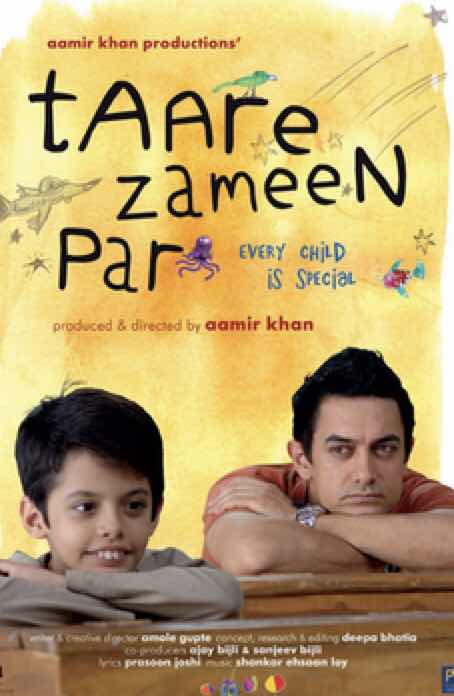
IMAGE CREDIT

Like Stars on Earth, a film by Aamir Khan details the story of a “Duffer” Dyslexic Child, who just happens to be very intelligent:

Everyone is special, not least that know God the most. 


Many parents of Downs Syndrome children say that they would not change them for the Earth, precisely because of the amount of love that they bring into their lives. 


To be generous is to know God, and to know God is to be blessed and a bringer of blessings. 

Tuesday, 20 April 2021

A supplication to God for Ramadan

A dua for Ramadan 


“Did He not find you an orphan and gave you shelter, find you straying and guide you, find you in want and made you rich..” S Ad-Duha, early Meccan revelation. 


So ended the period of silence in the revelation sent to our Messenger (saw), which mirrored that of a bigger and greater silence. 


For Nabi Isa (as) - Jesus (may God be pleased with him) - told his followers that the Kingdom of God was near at hand. 


An unprecedented 600 year silence followed on from that penultimate revelation. And some of the believing men and women from that Nation still, unknowingly, wait for it’s completion. 


Each and everyone of us is born alone, separate, cold and unloved and then God puts compassion into the hearts of our mothers, families and communities. 

And then God sent all of the Messengers and Prophets as a guiding light so that we might know of the truth of His existence. 


And yet mankind was still in need. 

And then God enriched us with Islam. 


 ðŸŒ™ With a qibla that unites us. 

🌙 With the prayer that is the key to paradise. 

🌙 With the zakah, and charity, that purifies us. 

🌙 With an abundant life that is a source of continual inspiration- the Seerah of our beloved Messenger, Muhammed (saw). 

🌙 With a heavenly recitation that soothes, cajoles and instructs us. 

🌙 With the month of Ramadan that enlivens us. 

🌙 With the Hajj, the most open and accessible physical reminder of the promised meeting. 


Is not Allah t’ala- God, the most High- the most generous and gracious. 


O Allah the first casualty of Ramadan is often the loss of patience, make us patient and easy, grateful and kind, and happy with whatever fare we are given. 


O Allah bless us that we might praise you this Ramadan to the best of our ability. 

And even though we cannot do justice to all the praises that are due to you, accept them from us. 


O Allah make this Ramadan a source for becoming closer to your words, and their recitation. 


O Allah indeed we are deficient, overlook our deficiencies, and help us in our proficiencies. 


O Allah we are the wrongdoers, but you are the one that loves to forgive, so forgive us. 


O Allah we are in need, so fulfil our needs, and the needs of our brothers and sisters who are more in need than us. 


O Allah for those in distress relieve their distress, for those feeling alone give them the company of angels to soothe them, for those in need of help provide them with an ally to help them. 


O Allah bless us that if we have the means then open the ways for us that we might make the Hajj this year in answer to Ibrahim’s call that reverberates down through the ages. That we might honour your house and fulfil our obligations to you. 


O Allah bless us that we might be amongst those that do good, are true and honourable, and stand up against injustice wherever it may be. 


And are not scared to call it out. 

And are not scared to care. 


Ameen. 

Friday, 9 April 2021

Ibrahim’s Children

The Messenger (saw) said that when two people love each other for God’s sake and by His leave then He will make them like so in the Highest Heaven. It is as if the love referred to here is because of evident dissimilarity, that in spite of it all, they would go miles for one another. And be there for one another. 


Then when the Messenger (saw) said that the one who shelters and feeds the orphan child that he will be like that with him. Take a second to reflect on that. 


In fact reread the above paragraph again, replacing the Messenger (saw) as one of those two. 


Irrespective of your dissimilarity, irrespective of your mistakes and we all have them, the Messenger (saw) is holding a door wide open for you to be that close to him, simply by showing love and affection and taking care of the orphans from whom you cannot gain. 


Then isn’t it a shame that we worry about the legality of it all. 


Be like the fighters at Badr when they were told that Heaven lies beneath the shadow of swords, threw away their date fruits as an incumbrance from something far greater. 


Throw away your scruples and do the right thing. 


And remember the whole of the Muslim family can trace the ancestry of each, and everyone, of us directly to Ibrahim (as), a more near relation than that of Adam, the father of mankind. For did not God, the Most Merciful, call him (Ibrahim) our father is Surah Hajj (see the last verses). 


And a relation that God makes, let no one doubt. 


So if any has not a father, or his/her father is absent, then remember that God has declared that her/his father is the father of the Prophets, the friend of God, Ibrahim (as).   


And do not treat them unjustly. 

Treat each with loving care. 

And never abandon them, nor shut any door off from them. 


And if you can’t house an orphan then, like me, sponsor them and care for those who are near to you. For God loves most those charities that are little but often done. 


In the month of Ramadan our charitable acts are even more blessed. So take advantage of that blessing. And show even more care, love and affection. 


Shafees 


Wednesday, 7 April 2021

Ramadan Kareem


The month is near upon us,

when we come alive. 


For what we can do then, 

we can do, in no other. 


Despite our words being, fewer,

And our time less our own. 


Something stirs our spirits,

Our efforts redoubled, anew. 


Mammoth events, await

So let not sabr be the first to depart 


For when the pangs of hunger, bite,

Or things go skew and out of plan 


Sit down, be calm,

Remember 


For remembering only profits 

The one who yields to God’s words. 


And the greatest of that is the Quran

A solace to our hearts 


An embroidery to our minds

A blessing to all those who hear. 


Shafees 

1st version APRIL 2020, no less true.