Friday, 30 April 2021

The Ignorant Man and the Worshipper

The Messenger of Allah, sallallahu ‘alayhi wasallam said: “Indeed, an ignorant man who is generous is dearer to God than a worshipper who is miserly.”


Looking at this Hadith and juxtapositioning first the ignorant man with the worshipper and then in reverse generates incredible meaning:


First:

Normally the opposite of an ignorant man is a knowledgable man. Taking this as the context the Hadith then reads that 


GOD loves an ignorant man who cannot share any knowledge, since he has none, and so he shares his time, money, smiles etc... Over a knowledgeable man whom here the Prophet (saw) reduces to a worshipper since he does not share his knowledge.


And then also, another way of juxtapositioning the two would be as follows:


The opposite of a worshipper is one who does not pray and does not worship. Here GOD loves


An ignorant man who does not know that he had been commanded to worship over a worshipper who is miserly. Plainly because the Ignorant man actually knows GOD more than the worshipper. 


For ALLAH t'ala is the most generous, gracious - the one that bestows without measure. 


O Allah bestow us without measure of understanding your religion, and send your peace and our salutations down upon Muhammad (saw), indeed the most intelligent of those whom you sent. Aameen. 


IMAGE CREDIT

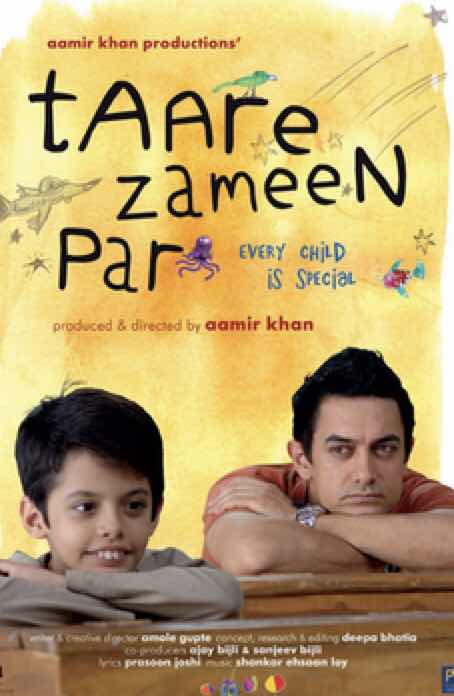
Like Stars on Earth, a film by Aamir Khan details the story of a “Duffer” Dyslexic Child, who just happens to be very intelligent:

Everyone is special, not least that know God the most. 


Many parents of Downs Syndrome children say that they would not change them for the Earth, precisely because of the amount of love that they bring into their lives. 


To be generous is to know God, and to know God is to be blessed and a bringer of blessings. 

Tuesday, 20 April 2021

A supplication to God for Ramadan

A dua for Ramadan 


“Did He not find you an orphan and gave you shelter, find you straying and guide you, find you in want and made you rich..” S Ad-Duha, early Meccan revelation. 


So ended the period of silence in the revelation sent to our Messenger (saw), which mirrored that of a bigger and greater silence. 


For Nabi Isa (as) - Jesus (may God be pleased with him) - told his followers that the Kingdom of God was near at hand. 


An unprecedented 600 year silence followed on from that penultimate revelation. And some of the believing men and women from that Nation still, unknowingly, wait for it’s completion. 


Each and everyone of us is born alone, separate, cold and unloved and then God puts compassion into the hearts of our mothers, families and communities. 

And then God sent all of the Messengers and Prophets as a guiding light so that we might know of the truth of His existence. 


And yet mankind was still in need. 

And then God enriched us with Islam. 


 ðŸŒ™ With a qibla that unites us. 

🌙 With the prayer that is the key to paradise. 

🌙 With the zakah, and charity, that purifies us. 

🌙 With an abundant life that is a source of continual inspiration- the Seerah of our beloved Messenger, Muhammed (saw). 

🌙 With a heavenly recitation that soothes, cajoles and instructs us. 

🌙 With the month of Ramadan that enlivens us. 

🌙 With the Hajj, the most open and accessible physical reminder of the promised meeting. 


Is not Allah t’ala- God, the most High- the most generous and gracious. 


O Allah the first casualty of Ramadan is often the loss of patience, make us patient and easy, grateful and kind, and happy with whatever fare we are given. 


O Allah bless us that we might praise you this Ramadan to the best of our ability. 

And even though we cannot do justice to all the praises that are due to you, accept them from us. 


O Allah make this Ramadan a source for becoming closer to your words, and their recitation. 


O Allah indeed we are deficient, overlook our deficiencies, and help us in our proficiencies. 


O Allah we are the wrongdoers, but you are the one that loves to forgive, so forgive us. 


O Allah we are in need, so fulfil our needs, and the needs of our brothers and sisters who are more in need than us. 


O Allah for those in distress relieve their distress, for those feeling alone give them the company of angels to soothe them, for those in need of help provide them with an ally to help them. 


O Allah bless us that if we have the means then open the ways for us that we might make the Hajj this year in answer to Ibrahim’s call that reverberates down through the ages. That we might honour your house and fulfil our obligations to you. 


O Allah bless us that we might be amongst those that do good, are true and honourable, and stand up against injustice wherever it may be. 


And are not scared to call it out. 

And are not scared to care. 


Ameen. 

Friday, 9 April 2021

Ibrahim’s Children

The Messenger (saw) said that when two people love each other for God’s sake and by His leave then He will make them like so in the Highest Heaven. It is as if the love referred to here is because of evident dissimilarity, that in spite of it all, they would go miles for one another. And be there for one another. 


Then when the Messenger (saw) said that the one who shelters and feeds the orphan child that he will be like that with him. Take a second to reflect on that. 


In fact reread the above paragraph again, replacing the Messenger (saw) as one of those two. 


Irrespective of your dissimilarity, irrespective of your mistakes and we all have them, the Messenger (saw) is holding a door wide open for you to be that close to him, simply by showing love and affection and taking care of the orphans from whom you cannot gain. 


Then isn’t it a shame that we worry about the legality of it all. 


Be like the fighters at Badr when they were told that Heaven lies beneath the shadow of swords, threw away their date fruits as an incumbrance from something far greater. 


Throw away your scruples and do the right thing. 


And remember the whole of the Muslim family can trace the ancestry of each, and everyone, of us directly to Ibrahim (as), a more near relation than that of Adam, the father of mankind. For did not God, the Most Merciful, call him (Ibrahim) our father is Surah Hajj (see the last verses). 


And a relation that God makes, let no one doubt. 


So if any has not a father, or his/her father is absent, then remember that God has declared that her/his father is the father of the Prophets, the friend of God, Ibrahim (as).   


And do not treat them unjustly. 

Treat each with loving care. 

And never abandon them, nor shut any door off from them. 


And if you can’t house an orphan then, like me, sponsor them and care for those who are near to you. For God loves most those charities that are little but often done. 


In the month of Ramadan our charitable acts are even more blessed. So take advantage of that blessing. And show even more care, love and affection. 


Shafees 


Wednesday, 7 April 2021

Ramadan Kareem


The month is near upon us,

when we come alive. 


For what we can do then, 

we can do, in no other. 


Despite our words being, fewer,

And our time less our own. 


Something stirs our spirits,

Our efforts redoubled, anew. 


Mammoth events, await

So let not sabr be the first to depart 


For when the pangs of hunger, bite,

Or things go skew and out of plan 


Sit down, be calm,

Remember 


For remembering only profits 

The one who yields to God’s words. 


And the greatest of that is the Quran

A solace to our hearts 


An embroidery to our minds

A blessing to all those who hear. 


Shafees 

1st version APRIL 2020, no less true. 

Thursday, 1 April 2021

Heaven and Earth. Unity or Duality?

Heaven & Earth: Unity or Duality?


A LOSS?

In the last post I argued that many religious Muslims have difficulty with the loss of the revelationary link between Heaven and Earth. This finality, in a long and ancient history of Messengers, and Prophets, from GOD, occurred when the final Messenger sent to ALL Mankind, Muhammad (saw), left us.


And it is their incapability to deal with that loss that causes them to suppose the continued revelationary and/or spiritual succession of Muhammad (saw), either through his family (our Shia brothers) or through his dear ones (our Sufi brothers).*1


*1[The way in which our cousin brothers of the Christian Faith deal with the same problem is through the supposition of a ephemeral entity called the Holy Ghost and/or through the divinement of the society of their Church.]


However the message that Muhammad (saw) brought, whilst affirming all that came before it, revolutionized our understanding of the relationship and link between Heaven and Earth.


Heaven v/s Earth.

For in OUR prior Judeo-Christian Heritage we find that Heaven and Earth were divided, separate and disparate. The antonym for Heaven, there, is almost Earth. For in Christian fiction Hell lies below our plane of existence, at the very centre of our sphere.


There also we find that Adam (as) FELL to Earth, whereas in the Qur'an Adam (as) was sent down to Earth (anzalna, which is also used to denote the descent of the Angels, Revelation and even life giving rain). Both traditions agree on whence he came, Eden or Aeden is in the Heavens above, but the manner of his descent is relevant.


From Heaven, being the abode of the divine, Adam (as) fell to Earth, being the place of mundane.


Heaven is perfection, whilst the lot of those on Earth is decay and loss. Heaven is bliss, whilst Earth is all toil and hardship. Heaven is the place of those whom GOD loves, the elect company of near ones. And Earth is the place of the rebellious ones who do wrong.


Thus was the speech of the high company of Angels when they were told of the creation of Adam (as), "Will YOU, O GOD, create one who will wreck mischief and shed blood on Earth, Whilst we do glorify YOUR every praise (in Heaven)?" (TMQ S2 paraphrased).


And it is for this reason that all religions see religiosity as being other-Worldly, Heavenly.


Whilst Muslims acknowledge the primacy of the World to come, they are however forbidden from seeking to escape from the here and now of Our World, with all of its mess/ uncertainty and guaranteed loss (S. Asr).


For them Monasticism, or any other like phenomena, has been expressly forbidden through a Prophetic Hadith, and this is even whilst our Prophet (saw) acknowledged that GOD loves such people. (There is no contradiction here, because the fare of the Muslim is different from the fare of all other Nations).


Life as Struggle.

Muslims know that what GOD intended was for Life to be a Struggle. For when Adam and Bibi Hawa (Lady Eve) (as) were sent down, Allah t’ala decreed “And let there be enmity (hardship/ friction) amongst/between you” (S2). The you here refers as it were to the whole of Mankind. 


And so by extension if Life is easy then you are not living; truly not living.


Life is Struggle and full of movement. And in all that flux Muslims seek to keep their heads firmly fixed to their bodies lest they fall. Five times a day their hopes go heavenward, five times a day their eyes return homeward.


And so a Muslim is almost like a ballet dancer or dervish that spins and spins, and who in order to prevent himself falling keeps his head (and eyes) firmly fixed on one of two points... snap, snap, snap; between 2 points at two extremes.


To see the Spiritual.

Snap, snap, snap.....between the Spiritual and the Mundane.


Until with gathering speed, the two merge in his eyes... and he finds the Spiritual in the Mundane.


And so after those 5 appointed times, and after having been reminded of the true reality that awaits him, our hero seeks his livelihood on this, his, temporary home (Earth). And Muhammad (saw) on seeing a man working hard with his hands said of him “ALLAH t’ala (GOD, Most High) loves those hands.”


The Heavenly and the Mundane.

This understanding that the Heavenly can be found in the Mundane, is something that Muhammad (saw) brought. For whilst Nabi Isa (Jesus the son of Maryam)(as= may GOD be pleased with him) asked his haweri-oon (disciples) to renounce the World, Muhammad (saw) asked his followers to embrace the World and when the time comes, to embrace the Next. To embrace this World fully and in it’s entireity, but not to love it. To own wealth, but to not let it own you. To act responsibly and then to learn to have faith and trust in GOD, leaving all things to HIM (who creates and then fulfils).


For Muhammad (saw) said “Tie your camel first (to prevent it running away) and then have faith” and “Be in this World as a stranger/ traveller, who stops in the shade of a tree for a while”.


To hold an Opinion.

For such a Muslim, Islam is a religion full of empowerment. For they understand that it is easy to bow when you are weak, but when you are strong and you bow, that is something that GOD delights in.


And so we pray, how we pray. We stand to demonstrate our ability and GOD-given power and then we bow, to make clear our choice of submission. The fiqh-rules of the standing up after bowing forbids the use of an implement to aid in the standing. You cannot lean on a support, you must if able stand on your own two feet, by your own means.


And likewise for some Muslims piety is “Allahu Alam”= GOD knows best, which of a surety is Truth. But although the reply of the companions was often “GOD and HIS Messenger know best” on many occasions, this was not their reply towards the end of Muhammad’s (saw) mission.


For Muslims, who understand what GOD loves, hold an opinion. They study and contemplate and then hold an opinion and then when knowledge comes to them of what ALLAH t’ala or Muhammad (saw) decreed, or said, resign their opinion in favour of GOD’s decree. And this is true piety. To embrace the World and then to relinquish its hold on you for that which is better and much more longer lasting.


To remove pain and hurt 

They know that their Christian brothers conception of religion before them, that religiosity requires both atonement and pain, is not Godly. For God is not in need of pain and suffering. 


And that their duty is the removal of pain and suffering. The creation of a society that is free from it, where all of the people are but one brotherhood before the Most Merciful. 


Whom they choose

And they understand the specificity of “Choose the one who best knows the Qur’an” as opposed to the generality of “Obey those who are put in power over you”, two hadiths whose meaning becomes apparent to those who study the Seerah and the Sunnah of our beloved Prophet Muhammad (saw).


May Allah t’ala reward Muhammad (saw) abundantly who opened up for us both this World and the Next. And who taught what ALLAH t’ala intended for us, not to hide... but to fight against all wrong and oppression.


END

For more on whom we should chose see the following blog 

Wednesday, 31 March 2021

The Proof of God


Many are the people who ask this question. 
Many are the people who conclude there is none. 

But it is their approach that is fundamentally wrong. For GOD is not the ONE to be questioned. 
Rather HE is the greatest, most supreme and most wondrous of assumptions. 

To assume HIM is to believe, and proof comes only afterwards in our thoughts and actions. And it is that assumption and belief that changes man in wondrous ways that no other thing can. 

In the words of Al-Qur'an (S. Maun, neighbourly kindness) "See you not he who denies the religion? Does he not shun the orphan-child, and does he not disregard the poor?". 

To believe in GOD is to leave off the narrowness of this World, and enter the vastness of the World to come. 

For such a person that does not mean that they feel no pain, and that they do not grieve. But only that their pain and grief is tempered by a certainty of it's limitedness. 

And more importantly that they are able to give far more than any other man ever could. 

For man, in essence, is a self-interested being. And how can he truly give selflessly, without even a regard for reward or acclaim, unless he believes in God. How great is GOD, how magnanimous and generous is HE and how abundantly good HE is! 

And to God, most gracious, is the final return of all. 

For a true Muslim this certainty is not a cause of bigotry, for he is all to aware of the supremacy of GOD and the frailties of himself. 

He is fully aware that pride, arrogance and hypocrisy can be the downfall of even the best of us. And that GOD, most gracious, loves best those who do good to the people. This he continually reads in the Qur'an. 

And this the believer knows is without exception, or qualification, for all men except those who wantonly do wrong. 

Precisely because he remembers the words of GOD, most gracious, kept in the famous ahadith qudsi... "Was I not thirsty, and you did not water me. Was I not hungry and you did not feed me. Was I not in need of shelter and you did not house me!" (*1) 

To end, God, most gracious, is the greatest assumption a man can ever make. 

To believe is to change your life in ways no other thing can. 

To believe is to live and die happy, even that is when other people might consider your circumstances strained. 

To believe is to free yourself from worry, to believe enables you to give happily. 

 Your brother, Shafees. 
 1st posted MySpace: 03 Jul 2008 
2nd posted blogger 24 March 2013 03:58
 - Posted using BlogPress from my iPhone

Monday, 29 March 2021

A Transcending Loop

A transcending loop. 


As a book, the Qur'an stands out by the sheer amount of self-referential passages that are contained within it. This is one of it’s modern miracles. 


Indeed, you would be hard pressed to find a Surah or Chapter within the Quran that does not begin, or end with, a reference to itself, in one form or another. Obviously there are exceptions, but these exceptions just draw more attention to it’s unusualness. 


In the Pulitzer winning  “Godel, Escher & Bach” Douglas Hofstadter argues that the key to self-consciousness, the I, is what he terms a strange loop. And he argues that such loops transcends themselves. 


He presents various examples to pad out his claim from the double helix of DNA, which transcends it’s being a simple replicating molecule, since parts of it code for the very colour of your eyes. To the Escher drawings with each of two hands painting one another, or monks ascending a never ending staircase which loops on itself. To a Bach symphony which gives us the impression of an ever increasing pitch whilst always remaining within hearing bounds. 


And then to Godel’s mathematical theorem in which he encoded theorems, in self-reference, within a numeric framework and proved that not all that we know to be true can be proven so. 


It is self reference that allowed this fact to be proven true that in any well defined language, not all that we know to be true (since it is self evidently true) can be proven true. Note the loop even here, on itself. *1


This self referential transcendentalism is also found within the very essence of our religion. 


Just think how grateful to God we should be that He has given us gratitude, and imagine if He left us as ungrateful fools. 

How gratitude is itself and unbounded blessing. 


Take a minute to let that sink in. 

That we should be grateful to God for choosing for us to be grateful. And when you contemplate it, you realise that it is impossible for your gratitude to compass what it should, and what it sets out to do in the first place. *2


Recall then the verse in the Quran in which God declares of Himself that He is the Most Grateful, the One who is independent of all, and in need of none. 

And that His gratitude can and does compass all that it should. 


Then contemplate the verse in Surah Nur, in which God describes Himself. The imagery whilst crescendoing to a summit is topped by the self referential “Nur ala Nur”. Light upon Light. Light over Light, in apparent reference to an unending loop, that has a meaning that transcends its very expression. Just as does the description of the olive oil that lights without even a flame touching it, and is neither of the East nor the West. 

The imagery is of God transcending light upon, or over, light. 


And now lastly consider our testimony of faith, that confirms us as Muslim in the first, and guarantees us Heaven in the last. 


A mathematician and logician of the calibre of Raymond Smllyan would be astounded by it. 


No gods except the God. 


There feels like there should be a loop here. And the apparent contradiction in the statement is astounding. It’s clear that something else is going on here which is very profound. And then you see what is really implied by the statement. 


No gods ergo the One God. 


Or if you prefer- 

No gods therefore the One True God. 


It is an outstanding statement. 

But still you feel that there is something missing, some loop missing from this statement until you realise that the loop is given by the first person, and it is that, that is also actually implied by the very statement. 


The Statement is God’s. 

And God declares its truth so many times in the Quran. 


Now the loop becomes clear. 

And the apparent contradiction is removed. And the statement actually transcends itself. 


(God declares) that there are no gods except the One True God. 


When you read the Quran and you come across a self referential verse, where the Quran, or Kitab, or Ayahs are mentioned know that there is a second meaning there that transcends the apparent and clear meaning. It’s beautiful to deliberate and contemplate on those other meanings. 


So for example one reading of V 2 of Baqara has this ostensible meaning:


That is the book about which there is no doubt.*3


But the other meanings of the same rendering could well be in reference to V23 of Baqara, and another could well be “so follow it”. 


In Surah Balad the self reference is beautiful in what it points to. 

And that is for you to find. 


And whenever you come across others contemplate them too. 


Knowledge is sought through study and contemplation. Not lectures, nor talks, nor this above. 


Shafees. 


NOTES

*1 this is an extension to the classic statement “this statement is false” which cannot take a specific truth value (it is neither true nor false, or perhaps both at the same time?). 


*2 that we should also be grateful that God enabled us for being able to be grateful for being grateful (ad infinitum). 


*3 a second reading is as follows. 

That is the book. No doubt a guidance for the pious. 


NOTE there was an error in the first draft. 

Please see comments.