Friday, 17 January 2020

the Invisible

The invisible 


“There is more than what can be seen.”

This is the cornerstone of our belief, and the third verse of al-Baqara that we believe in the unseen. 


Our belief goes further than that, for we believe that the unseen is far, far, greater than all that can be seen. 


Indeed it is a poor man who does not feel the connection with the Most Gracious, who is at at one and the same time the God of all, and the God of each. 


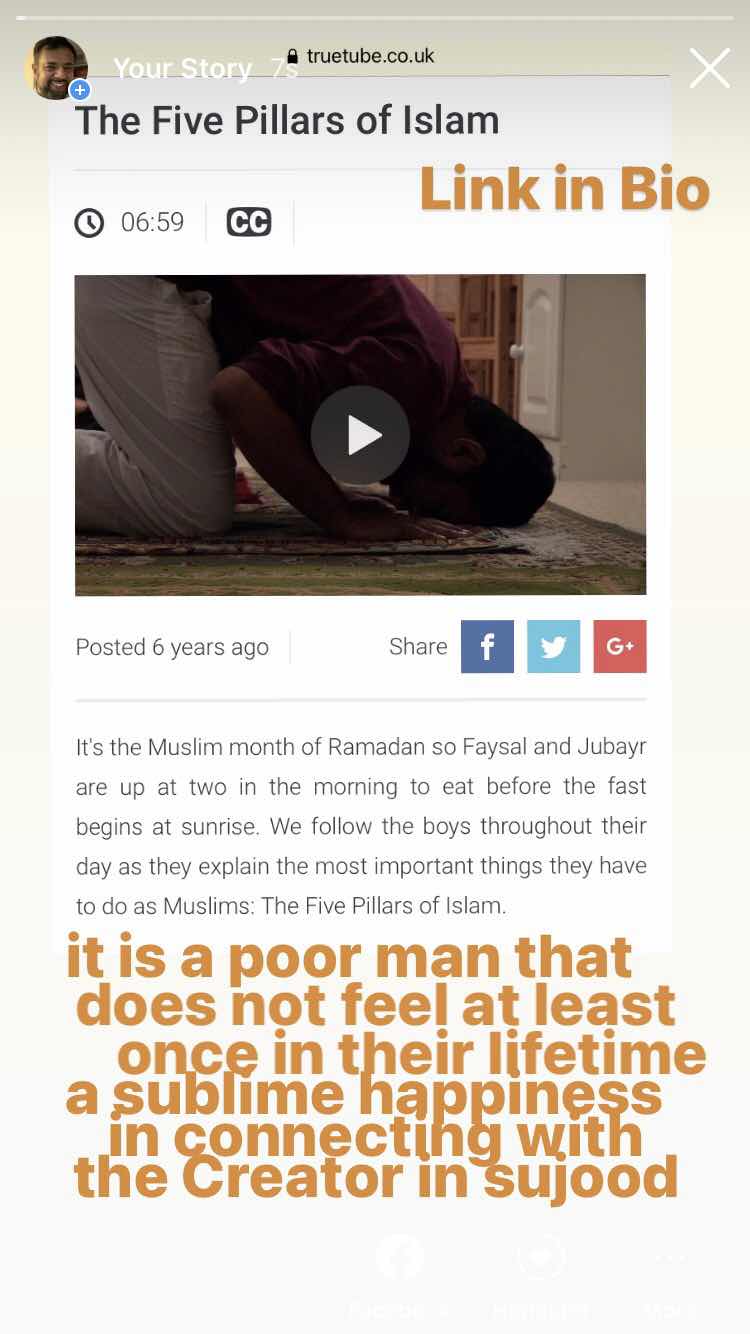
It is indeed a poor man who can not submit himself to the infinitely merciful, creator of all. Who does not know how to pray, and does not feel, at least once within their lifetime, the sublime happiness within prayer.


Indeed it is a poor man that gets lost in the minutiae of his small life. Who does not, and cannot, contemplate on the vastness, and intricateness of our World, and the consummate smallness of our common place within it.


Indeed it is a poor man that runs away from the richness of faith, because he believes that he cannot do justice to what he sees in the religion as intricate, and complicated, requirements and dues. He runs because he lacks faith in God’s good grace and knows not the Hadith Qudsi in which God says “whoever comes to me walking, I will come to them running” *1


Within prayer I ask at times, “O Allah bless me that I might be amongst those that praise you, and my children too.“

I affirm the reality of hell, even though I cannot see it and ask that I be saved from it. And I affirm the reality of heaven, even though I cannot see it, and ask that I be entered into it. 


And it does not make me arrogant, rather the realisation of these things that are far greater than me, humbled me. That my fate is not mine own to decide. 


That we believe in the hidden greater realm does not make us any less rational. For the verse that precedes that third acts as a spur towards the removal of doubt, by stating that it is (from) a book (the Qur’an) without doubt. 


There are two mechanism towards that end, the removal of doubt, the first is experience and the second is reason.


That the Qur’an challenges us to use our rational minds at the very first, with its above statement, and then later redoubles that challenge in a verse that directly mentions it, is of major consequence. *2


Succinctly then that same third verse, that we are concerned with, provides a formula for the attainment and actual realisation of glimpses of the hidden greater realm, that abounds around us:


“Who establish the prayer and spend (on others) out of what we have given to them”


To enter into Islam is in to enter into this, and it is an experience that is the most telling and cannot be known except through that experience. 

“Verily this religion is firmly solid, so study its depths (or enter into it) with gentleness”. 


The best gift that you can give to any man Is the gift of prayer, out of gratitude, that you make it conducive for others to submit themselves in prayer to the Most Gracious. That you establish the prayer in yourself, and help to establish it in others whose life yours touches. 


And then when you make not yourself the centre of your World, but you make the fulfilment of the needs of others the centre of you. 


Then the door unlatches, and you see and experience glimpses of things that are not of this World. 


The salutations of peace from the Angels when your heart is troubled, or the smell of flowers en route to the mosque in an alleyway, where there are none, or even a true dream.  


But the best of it is when you surrender yourself in the prostration of the prayer, and feel awash with the harmony of true self-effacement, and an involuntary smile lights your face. 


What I have said here is my considered opinion. If it is wrong then that wrong belongs to me. 

Knowledge is sought through study and contemplation, not via lectures, nor speeches, nor this above. 


END

*1 Abu Dharr reported: The Messenger of Allah, peace and blessings be upon him, said, “Allah Almighty says: Whoever comes with a good deed will have the reward of ten like it and even more. Whoever comes with an evil deed will be recompensed for one evil deed like it or he will be forgiven. Whoever draws close to me by the length of a hand, I will draw close to him by the length of an arm. Whoever draws close to me the by length of an arm, I will draw close to him by the length of a fathom. Whoever comes to me walking, I will come to him running. Whoever meets me with enough sins to fill the earth, not associating any idols with me, I will meet him with as much forgiveness.” Collection of the sayings of the Messenger, Muslim. 


*2“And if ye are in doubt as to what We have revealed from time to time to Our servant, then produce a Sura (chapter of the Quran) like thereunto; and call your witnesses or helpers (If there are any) besides Allah, if your (doubts) are true.” V23 Baqara. 

Friday, 3 January 2020

Exploitation and Freedom

Exploitation and Freedom


When we look at the mantra that governs the Conservative Party, or the Republicans, and not what they advertise about themselves but who they actually are...


You would be hard pressed not to find the following unsaid motor...


“Exploitation is necessary to create growth”


Or even 


“Exploitation is a necessary evil “. 


This meme has rooted itself within our thought pathways so completely, so much so that we fail to recognise both its pre-eminence, and then also fail to challenge it.  


To question its validity and the validity of it’s argument is not difficult, but what is difficult is to see its dire effects on us each individually and as a people. 


It’s claim to validity lays on its reversal, that “Growth or Wealth are created when someone, who matters little, is exploited.”


Now that it’s stripped of its disguise maybe we can appreciate its true worth. That it’s true that when someone is exploited, the exploiter gains innumerably and often very quickly, but at what cost. And does the gain justify the cost. But also when reversed the argument doesn’t logically hold; X=>Y, doesn’t necessarily mean that Y=>X. 


That whilst exploration leads necessarily to prosperity for the exploiter, that it does not hold that the only means towards prosperity is through exploitation. 


Indeed there are other more wholesome ways to ensure prosperity, not for the few- but for all. And it is Adam Smith in his magnum opus “The Wealth of Nations” who argued in that vein, that true wealth is created by open and free trade. Exploitation is neither open nor free. 


When Nations are free of exploitation, each Nation in its turn will progress more fully in what it does best. And the free movement of myriad goods and services will make us all wealthier, precisely because each will be that much more affordable (less costly). 


We should be in no doubt that the mantra that sustains exploitation and oppression throughout our World, is not there to make us all more prosperous. 


It is there to keep the few that prosper at the expense of the many. 


It is not about freedom, nor is about democracy, nor is it about anything good. 


It is this mantra that sees India and China tagged as great Powers, even when they cannot or will not provide for their own citizenry. It is the very fact that they are ready to exploit others, even if it is their own people, that makes our Politicians and Media call them “powerhouses” or the “Worlds biggest Democracy”. Both of which they are not, and both of which they wouldn’t be without exploitation.  


In the last couple of days we have each given and been given wishes of future prosperity by our fellow countrymen:

“May the New Year bring you prosperity”. 


The Conservative Party is viewed as being the Party of Aspiration by the vast majority of our countrymen. 


That the country does not aspire to honesty, nor to truth, nor to helping one another is a damning realisation. 

That they accept and aspire to exploitation is another damning realisation. 


That we must challenge those assumptions that allow and encourage exploitation is a must. 


We need, all of us to remember, how fully against exploitative behaviour our religion is. 


And for that it is enough for us to remember the words of the Messenger (saw):


“Do not intercept goods before they reach the market.” (Narrated by Imam Ahmed). 


Even in that most simplest of aspects, we are not to hinder men nor women from gaining their true worth. 


Knowledge is sought through study and contemplation. Not lectures, nor talks, nor this above. 

Friday, 20 December 2019

the Kingdom of God

“Anybody who makes himself out to be a somebody will be a nobody”( *1).  More than any of his words it is these that are the most telling in regards to the mission of Jesus (as). 

For the gospel, literally the “good news” of life everlasting, was not unique to him and was brought by every Prophet, of the Most Gracious, before him. As the Qur’an testifies they were, each and every one of them, “Bashir’un wa Nadir’un” -Bringers of the Glad Tidings and Warners of a Severe Day. 

And just as his message was relevant to the Children of Israel, then, so that message has relevance for us today. 
For our Messenger (saw) foretold that “you will follow them even if they go down a hole” (*2); said in reference to our similarity with the former manifestations of the then muslim faiths before our time- the Jews and the Christians.(*3)

Some 2000 years ago, the Jews were dominated by Rome. And felt severely oppressed by that dominance. 

Rightly, they were a proud people boasting the lineage of the Prophets down from Ibrahim (as). And they lived within the precincts of Jerusalem with their book and their prophesies. 

One such prophesy talked of a warrior Prophet who would be sent to defeat their enemies and bring peace. That was the prophesy of Zachariah. (*4)

And so the greater the oppression, the greater their religiosity. For they believed that the more religious they became, the more holy, that then GOD would send them that prophet to fight for them. 

That was the community of believers at Qumrun for whom we have to thank the Dead Sea Scrolls. 

Some others sought refuge in the Law and still others in the Scripture. 

Just as some of us today seek refuge in types of Tawassuf (asceticism), whilst still others in the nitty gritty of the Fiqh or the Law. (*5)

But all of them, then, felt deeply their humiliation before Rome, and Roman man, and that paradoxically only increased them in arrogance. 

And so Jesus (as) was sent to bring them back from the brink. And to educate them in what they already knew. 

For when we listen to the message of Jesus (as) we see untold examples of him trying to enervate them once again with humanity, and consequently humility. 

For the Jews of that day despised the Samaritans, their erstwhile neighbours. And it is for this reason that Jesus (as) gave us the parable of the goodly Samaritan. That it is not who you are that defines your standing with God, but what you do with what you have been given. (*6)

And more than anything it is this message that they needed to hear in order to prepare themselves for the coming of his successor. 

Indeed, our belief is simply that, a culmination in the development of their belief.

That we are not special because of our belief, but that it is our belief that drives us towards performing good actions, and it is that that is special. 

And much more than that. 

For John the Baptist brought baptism as a means of purification, and nearly five times a day we anoint our heads with water (masa) in ritual ablution.  

Jesus (as) as a contemporary of John (as) adopted baptism and fell on his face in worship as we do. And he called towards the culmination of all belief in a day of cosmological proportions- literally the  Kingdom of God (or Heaven) on Earth.  

For what Jesus (as) said most astutely was that the culmination of all belief had begun in his time and within his ministry. This shocked the Jews no end, because whilst they firmly believed in those things, it’s coming true was something that they met with trepidation and hesitation. 

When approached and asked “are you the one foretold?” (The Adon of David, who would sit on the right hand of God. The one who would fulfil the prophesy of Zachariah). Jesus (as) replied, “How can the son of David be his Lord?” This was not a cryptic answer, but much more of a rhetorical question. For the priests well knew the answer even before they had asked it. 

That no Jew, no son of David, could be the one foretold. 

One whom our history asserts that they knew better than their own sons, because of the fullness of his description in their books. (*7)

For that honour lay elsewhere in the second line from the father of the Prophets; from Ismail the eldest son of Ibrahim, through Qusay, through Hashim who gathered Quraysh within the Holy Sanctuary; to our Messenger Muhammad (saw), the seal of the Prophets. 

And that day, the culmination of belief did not happen with the birth of the Messenger (saw), nor with the first revelation, but on the very first Night of Power; Laylatul Qadr; when the Heavens were sealed and the Kitab was sent down from the utmost Heaven to the lowest of them. (*8)

On that day a new era of rational belief began, with the revelation of the Qur’an. 

Over the next 23 years of Muhammed’s (saw) mission he received that revelation, piece wise, and through his heavenly counterpart, the archangel Jibreel (Gabriel). Until it’s completion with the rites of Pilgrimage that the Messenger (saw) taught us on the day of the greater Hajj, in his penultimate year: “This day we have perfected our favour upon Mankind and chosen for them Islam as their religion”, a verse of the Quran that was revealed just after. 

But before that, in the late Meccan period of that revelation, came down the verse of the Kursi (seat), which is fabled to be one of the greatest verses in the Qur’an. 

It is here that Allah t’ala, God most high, most likely first declared: “To HIM belong whatsoever is in the Heavens, and whatsoever within the Earth”. That to GOD belongs all, and to HIM is Sovereignty and Kingship, and to whom obedience is rightly due. (*9)

For whilst Christianity divides the Cosmos into an otherworldly Divine Perfection and contrasts it with the here and now of our Earth, filled with decay, loss, and the mundane (thoughts and actions that seek to drag us away from the beautification by religion). 

Islam brought about a revolutionary unification, that you can seek and find the divine within those very same mundane preoccupations. For example the Messenger (saw) once instructed us that God loves the one who works hard with their hands- literally God loves those hands. In the Islamic World View every movement and every act can become part of worship, the vital ingredient being that of pure intention. (*10)

When we fully appreciate that then man finds his place within the cosmos, and that which belongs to him, and that which he belongs to.  (*11). 

A truly sublime religion of Peace. 

What I have said here is my considered opinion. If it is wrong then that wrong belongs to me. 

Knowledge is sought through study and contemplation, not via lectures, nor speeches, nor this above. 

NOTES 

*1- written from memory. I have sought to find it but have failed. However on asking a learned Christian he affirmed that “Jesus often spoke about an upside down kingdom”. 

*2- I paraphrase and you to source the actual literal reading of the words of the Messenger. 

*3- muslim here is used in its operative sense as meaning submission to the will of God. 

*4 The Prophesy 

“Rejoice greatly, O Daughter of Zion!

Shout in triumph, O Daughter of Jerusalem!

See, your King comes to you,

righteous and victorious,

humble and riding on a donkey,

on a colt, the foal of a donkey.

And I will cut off the chariot from Ephraime

and the horse from Jerusalem,

and the bow of war will be broken.

Then He will proclaim peace to the nations;

His dominion will extend from sea to sea,

and from the Euphrates

to the ends of the earth.”


See also this former blog 

https://shafeesthoughts.blogspot.com/2012/02/coming-comforter-physical-proof-of.html?m=1

*5 Both of which are just different types religiosity, embellishing the religion and making it more than it is, whilst at the same time fuelling each of our own senses of specialness. 

*6 Remember here that Jesus (as) himself said that his mission was not to Samaritans but to the Children of Israel.

*7 As Is written in our Seerah books. Since numerous Jews emigrated and took up residence in Yathrib in anticipation of the Messenger being forced to emigrate there. This happened after he was forced to flee from Mecca. There in the newly named Medina they recognised him and whilst a few of their number believed and became Muslim, the majority of them rejected him just as they had Jesus (as). 

*8 I leave you to reference the different verses of the Quran that point to this eventuality as a matter of contemplation. 

*9 And it is here also that His greatest name and attribute is mentioned. 

*10 for further detail see this older blog ..

https://shafeesthoughts.blogspot.com/2012/09/heaven-and-earth_28.html?m=1

For a Muslim holiness is not to remain aloof from this World in an otherworldly appreciation, but the Sunnah (way) of our Messenger (saw) is to work and seek our livelihood on Earth and it is in this travail that we find our blessings. 

For the Messenger (saw) said “God loves those hands” on seeing a man hard at work. 

To seek the pleasure of God is simply to dedicate to God what you do, it is the Basmalla, the correct intention and a purity of purpose.  So much so that to even give presents to your family is considered worship. 

*11 Read S. Hashr the last few verses, and feel the completion of recognising your place within the scheme of things. 


Friday, 22 November 2019

al- Azhab “the Confederates”

Salaams my brothers 
*Jumaa Mubarak* 

Within each and every political entity, it is the matter of succession or continuation, that is always most pressing. 

As we draw near to the December elections it is worthwhile to recall that Islam was no different. 

As Brother Adil Salahi made clear in a recent Friday Khutbah the first emigration to Abyssinia was made for that very reason. To show very early on that Islam has relevance beyond Arabia, and to ensure that it’s mission to humanity would never be lost. 

The personality of the Messenger (saw) has always been central to any true understanding of Islam, and yet the idea of a direct succession GOD dispatched with force when He reminded of a true statement of a future fact: 

"Muhammad (SAW) is not the father of any man among you, but he is the Messenger of Allah and the last (end) of the Prophets. And Allah is Ever AllAware of everything". (33:40). 

Whilst Al-Azhab- the Confederates- came down as a direct result of the controversy concerning the annulled marriage of Zayd bin Harithah (as), it's relevance to the political circumstances following the Prophet (saw) leaving us should not be doubted. 

To realise this you just need to read and contemplate it, how it first starts strongly with an address to the Messenger, and then tells the companions that they will be held to account, and then gives clear instructions to the wives of the Messenger (saw). 

It is there that they first gain the title “Mothers of the Believers”, and ...

V32
“O wives of the Prophet! you are not like any other of the women; If you will be on your guard, then be not soft in (your) speech, lest he in whose heart is a disease yearn (for you); and even then speak a good word.”
Their role following on from the passing of the Messenger (saw) took a decidedly different turn, where they at once became instructors in the religion, and proofs of his truth, and took on prominent roles in the public life of the Muslims. 

But they did not and could not succeed him in political authority. 

So if direct succession had been ruled out, then what sole injunction lay within the body of Islam to instruct us in political continuation and that all necessary stability?

During the Prophetic era, Muhammad (saw) instructed us, through his very real example, in the ways of open consultation. (Shuraa’)

In the absence of any direct instruction to the contrary he (saw) left the bedrock of ALL political deliberation to be confirmed as being solely mutual consultation. 

Furthermore we know that this was not an oversight of his (saw), and also not an oversight within the religion, because we know of his preference. That he (saw) preferred Abu Bakr (as) cannot be doubted, and that he did not confirm him in that, cannot also be doubted. 

“Let all doors (to the Mosque) be closed except that of Abu Bakr (as)”

Once again, and even that is after his (saw) leaving us, did he teach us that the truest way within political deliberations would always be mutual and open consultation. 

That Abu Bakr (ra) directly appointed Umar (ra) following the uncertainty of the Ridaa wars and an expected opening of two fronts both from Rome and Persia. 

That Umar (ra) appointed a committee of the remaining Ashara Mubashara (the blessed ten that had been promised Heaven within their lifetimes). 

All of these methods could be taken to be part of the Sunnah of our Messenger (saw), but his greatest legacy in that task was how he left the people to confirm Abu Bakr (ra) after he had passed. 

This stands in open contrast with those who would have religious leaders as being confirmed as the leaders of his nation. For he told us that the inheritors from the Prophets are the learned, but not necessarily in political ascendency but in knowledge. 

Marcus Areulius, Caesar, advocated the rule of Philosopher Kings. 

But our Messenger(saw) when approached and asked “who is your leader?” Gave us the most splendid indication of who we should choose, he replied “the one who best helps the people”. 

The first and primary way of helping people is in regards to our relationship with God. That we must all fulfil HIS due.  And simply put that is to establish the five and make them easy. 

Then to exercise justice, and equality, amongst all. Then to bring ease to us in our worldly affairs. Then to set our National and Political goals and investments so that we might as a Nation develop and learn, to buttress against future uncertainty. 

These are the politics of the Muslims. And at Hudabiyya we learnt that in these things we are pragmatists. And if one cannot be had, then that should not, and cannot, rule out our striving for the others. 

The practise of Democracy here is nothing but joining the conversation, and making our views known. It is to speak to support those who are more just, against those who are unjust. To stand as one from the middling Nation, calling to a straight way. 

What I have said here is my opinion. If it is wrong then that wrong belongs to me. 

Knowledge is sought through study and contemplation, not via lectures, nor speeches, nor this above. 

Indeed al-Ahzab is full of contemplation and can only be read in the full light of Seerah. The details of its revelation cannot be found in any Sahih Hadith, and the seeker of knowledge needs to refer to Seerah. 

In it we find:
- the Salawat on the Messenger 
- The verse that relate that he (saw) is the best example to follow 
- That he is closer to the believers than their very own selves 
- That it is not fitting for a believer to hold another opinion when he (saw) has already decided a matter. 
- Where Khaybar is mentioned. 
- And the verses above. 
Contemplate well 🙏

Friday, 8 November 2019

the Shariah- Watering the Soul?

Friday 8th November 
Salaams brothers. 
Jumaa Mubarak. 

Nearly every book on the Shariah lauds the Sahabas (the Companions of the Messenger (saw)) for being quite unlike any other community of believers before them. 

Part of their great attributes were their selfless givings. Another relevant, and no less great, attribute of theirs was that they did not ask of the Messenger (saw) over many questions. They were content with whatever they were given. 

And it is those two attributes that singled them out, above and beyond the other Nations that preceded them. 

However, part of their ancestors attributes is that we constantly want to know what is halal, recommended, advisable, to be abstained from, regretted and lastly punishable. 

The mantra that I have led, since when I cannot remember, is that the two are not the same: religious obligations and worldly concerns. 

That in regards to religious obligations, and ceremonies having religious overtones, that they have been made clear and any addition to that is a deviation from what has been sent down and is a going astray (bidaa’ - religious innovation). 

But that in regards to Worldly matters, that what has been forbidden had been made clear and anything else is permissible.

But what most of my peers hold is markedly opposite, that innovations in Worldly matters should first be deferred to a Shariah based position. That in effect all matters require religious edicts for clarification.

Interestingly this was not the attitude of the Sahaba (as). 

Indeed after freeing and conquering Sham from Caesar the Sahabahs did not ask if it was permissible to use the same coinage. They did not deliberate on whether the means of exchange should mirror its true worth, as in the gold standard. 
Instead they maintained the civil administration within the towns, in a similar manner to the Prophet (saw) maintaining the key holder's family's right to the Kaba at the conquest of Mecca.

This is not to say that a currency worth it's weight is not of merit, but that such deliberations should be about economy and not be based upon religious grounds. 
Nor does it say that our beloved Prophet, Muhammad (saw), had nothing to contribute on the matter. 

The Sahabahs appreciated the easiest means of ensuring a smooth transition towards meaningful change. That what separates us from them, in this World, is not what we do, nor even how we do it, but the depth of meaning that affects us. When we do, the Shukr that GOD gave us the ability and knowledge to do, and when we err or forgot, the Istighfar that brings us home again.

Indeed it could be argued that the whole of religion lends accessibility to meaning. That in the removal of our short-term worldview from the scope of our thought the meaning of our lives intensifies. 
That what each of us do, or do not do, has ramifications beyond our limited lives. 

And yet the vast majority of our book concerns itself with our daily lives, and that in order to create a justly balanced society so that our psychology is freed from the oppression of wrong. 

Such an understanding also sheds light on the Sunnah. That part of it is as a way of using appropriate words to evoke meaning within us. And the other part is to prescribe in order that the "what" of deliberation is sorted, leaving ourselves more to contemplate the "whys". 

So we know what to say when a person passes on, or an ill eventuality befalls us, so that we are free to focus on the meaning contained within it: “Surely to God we belong, and to Him is our return”. 

The Shariah, or even the Sunnah, is there really to water our souls. 

But when we get bogged down in the semantics of law, of what is reprehensible and what is recommended, it falls short of its noble meaning. And becomes just another set of rules that people differ over. 

We should recall that the Shariah is literally the path that leads to the watering place. 

A place where people gather together and partake from the same unitary source. That quenches our common thirst. 

A place full of barakah, meaning and understanding. 

So focus my bothers, whilst you learn about the what to dos and when to do them, on the meaning. 
For the means is but a way to the ends, and the ends should be the purification and embellishment of our souls. 

What I have said here is my opinion. If it is wrong then that wrong belongs to me. 

Knowledge is sought through study and contemplation, not via lectures, nor speeches, nor this above. 

Wednesday, 23 October 2019

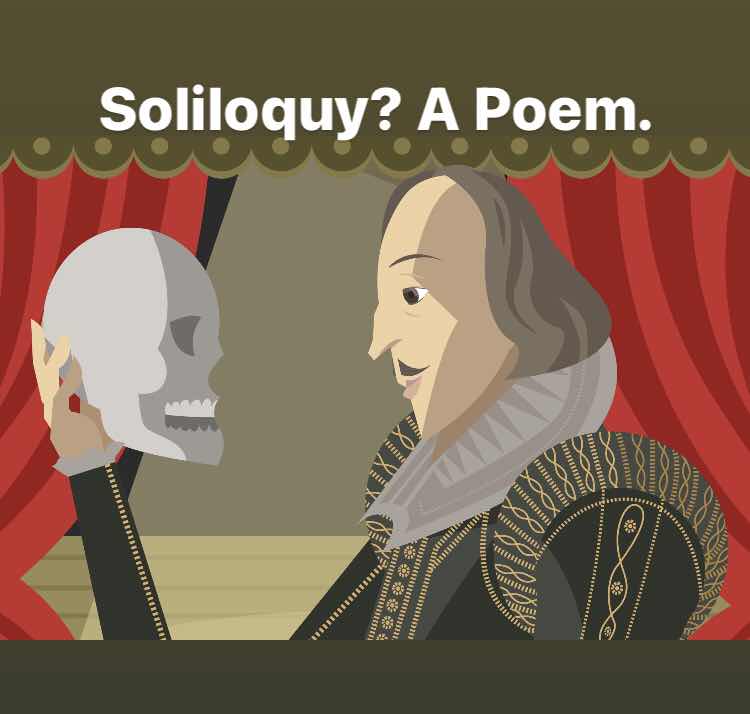
Soliloquy


What cue would you need to write that all important poem
That could churn your words with a buttery charm 

Melt in the mouth sweet pastry lines 
To not taste them would be a most heinous crime. 

In which person would you write,
The first, the third or the last?

I for one would rather the many identified 
He, nor she, but they sounds right 

And if the last, what ending would it be. 
That could sum up all the loneliness

Nor they, but one infinitely. 
The bitterest of endings,

To play, to speak without audience 
An unending soliloquy?

END. 

Friday, 11 October 2019

Grounded in a rights based society

Salaams brothers. 
Jumaa Mubarak. 

It seems like an age, but just over two weeks ago Lady Hale brought our Government to it’s knees; it’s then Brexit strategy lay in taters around the ankles of State. 

Many people, including some Judges, were surprised by the unanimous judgment. They believed that the Supreme Court had overstepped it’s mark. That no court had any mandate to interfere in the job of the Executive- the Government- that derives it’s authority from the very people it seeks to govern.  

Usul ul Fiqh, the roots of jurisprudence, began likewise by  inducing rules from law as practised, so as to lend coherence to it. But law as is practised is another beast. 

Until just last week I thought that a rights based society predated the revolution that Islam brought to the World. That when both Plato and Aristotle said that man attains his fullest form within state, because that is where he can realise his fullest capabilities. And that thus Statehood is a natural extension of man trying to be man. That they were talking from the stand point of rights. 

But I have just now learnt that they saw society as a fully functioning body: as an animal, with a head and limbs. There every man is simply a cell and performs a function for the greater good of all. And if he does not perform the function that is required of him, then the body of State sickens. 

How far from a rights based view of society this is. For here men have no right to freedom; they have instead  a responsibility to the State as an extension of their manhood and have right to little else, much less freedom. 

And there within that understanding, the State has both power and right to run roughshod over the rights, needs and freedoms of it’s constituent people; men, women and children. And is not accountable to anybody. 

Indeed our very conception of society, and state, that we live in here and in this age take as a given, has origin within Islam. 

That the executive is not above the law, and that the job of State is to balance the playing field as was so clearly told to us in Abu Bakr’s (the successor of the Messenger (saw)) first address to the people. 

Muslims are the ones that are grounded in rights one of another, even to the extent that we know the right that a son holds over his father, and the commensurate right that a father holds over his son. And it is this set of rights and obligations that grounds Muslim society to immutable standards. 

Indeed one man’s right is another man’s, or many mens’, responsibility. 

It is one of our Hadeeth Qudsi; where God talks to us, within a saying of our blessed Messenger (saw); that lays the foundations for universal human rights. 
There we are obliged as a people, and as a whole, to look after the destitute, the hungry and the alone. 

And it is the codex of law contained in the Quran and the Sunnah that saw the inception of a completely independent judiciary, even from the first day that the Messenger (saw) left us with the burden to uphold justice, even that is if it goes against ourselves. And more so on that occasion. 

We too are the ones that know that the most universal right is that held by the Most Gracious Creator of all. That it is for us to come to know Him, to recognise Him, to be grateful and thankful to Him, to worship Him as befits His Majesty, and then to ask of Him from His bounty. Anything less is corruption and a rebellion against the very fabric of existence and nature. 

Ours was the first truly modern society; a society founded on the Basmalla - in the name of Allah (the proper name of God), the Most Compassionate, the Most Merciful- wherein even the right of the morsel of food that we consume is recognised and subsumed because of, and through, His Grace.  

And to us belongs the future. 
For we have much more to give. 
And time is on our side.