Thursday, 26 September 2019

Not Just Another Faith


“Can someone who professes belief, sin, and if they do then does that take them into hypocrisy?”

“Belief is profession, but if it is more than that, then how does it translate into the visible?”

Asssalamu Aleikum brothers
May you have a blessed Jumaa’, and I hope one filled with contemplation. 

The above questions are interesting, and more so when we compare them with the answers given by our Abrahamic cousins. 

However with the prior Nations, the Jews and Christians, belief is an exclusive trait, one to be protected to the exclusion of all else, even that is when they pray for others’ souls. 

Whilst there is a tendency in Islam to follow on from our religious predecessors, two things exert a break on us becoming just another faith. 

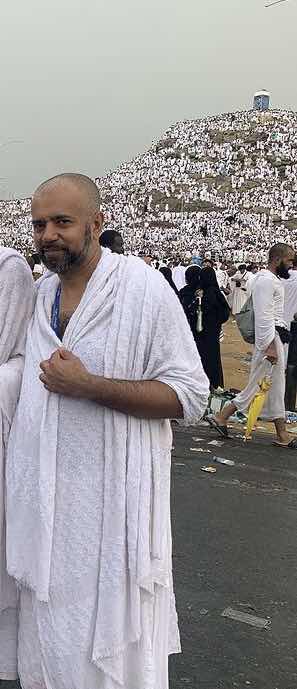
One is that we are informed in Surah Araf (the Heights, S7) that all mankind was drawn from the loins of Adam (as), and on the plains of Arafat were made to swear a sacred covenant that we would all only ever worship the One True Creator, who is Infinitely Merciful, Most Gracious . 

That covenant was exactingly similar to the covenant taken from the Jews. But with the Muslim Nation we are told that it was taken from all of the Children of Adam. 

It is this covenant that no man, nor woman, can recall, that exerts itself when any man, or woman, suffers and then calls on God for aid. 

Muslims also believe that it is this covenant that is also reflected in the natural disposition (the fitra) that is evident in all men, and all women, and more easily seen in all children who instinctively know what is right and what is wrong, what is just and what is unjust, what is good and what is bad. 

The second brake on us making our belief an exclusive one; to the exclusion of everyone else; is that it is an article of our faith that we believe that every Nation was sent their own prophet, and that we affirm them all as true. 

That all Nations of the World, and every age, were sent people, from amongst themselves, to remind them of the One True God and the path toward Him. And that therefore true belief is international, having no sectarian nor nationalistic basis. 

And then this belief, in the oneness of mankind and the universality of true belief, was made real and concrete at Israa, and Miraj. 
There the Messenger (saw) was taken in a single night to Jerusalem, there to lead thousands of those international Prophets, and Messengers, representing the whole mankind, in one distinctly Muslim prayer. 

Indeed in one of the most powerful and beautiful verses of Surah Baqara we are informed about the universality of our belief...

“It is not birr ( righteousness) that you turn your face to the east or to the west” (s2, v177) 
which then follows on with an explanation of what true belief looks like, after that is first emphasising, to us, it’s universality. 

Remember, that this verse was revealed in Medina, the city of the Messenger (saw), where the believers initially faced Jerusalem in prayer which was to its North. And then their qibla (direction of prayer) was changed to the Ancient House- at Mecca- to their south. 

And yet the verse here talks of East and West, not North and South. 

Indeed it is our faith that is truly universal, open to all, welcoming of everyone. And that’s truly amazing. 

Evident in our Salat, evident on the Hajj, and evident in our beliefs. 

What I have said here is my opinion. If it is wrong then that wrong belongs to me. 

Knowledge is sought through study and contemplation, not via lectures, nor speeches, nor this above. 


Friday, 30 August 2019

Marginalisation and the Brotherhood of Islam


Marginalisation was never a new problem for human society, but has always been a perennial one. 

One whose effects were even felt within the first truly Muslim community. 

Today our Nation suffers no less from those effects. For there are masajid around this country where people are exhorted to attend and give towards, as a religious obligation, but where in the end they still feel like they do not belong. 

No wonder we find disillusioned Muslims looking for another way, moving away from our communities and into the rural areas of England. 
Distancing themselves from their fellow Muslim brothers and sisters. 
This is nothing less than a reverse Hijra. 

And yet the fault lies not with them. 

The favour that Allah t’ala blessed humanity with, was the creation of an inclusive Muslim society which can be felt through the accessibility of each arkaan (religious rule) to each and every one of us. 

On the Hajj and in the Haram there is no exclusivity for the rich or the powerful. 

So much so that you witness many errors in those rules that it makes you smile, especially when you remember the Hadith  ...
“A man said “Allah is my servant and I am his Lord” and Allah smiled”

This because in his eagerness for the religion the man made a mistake, and so Allah smiled in appreciation of his eagerness. Then how can we not love the people who in their eagerness for the religion, err. They are neither mean, nor uneducated, but most loved. 

Islam came to perfect society. 
And the Messenger (saw) was sent to perfect morals. 

And whilst his answer to marginalisation within nascent Medina might rightly be thought miraculous, it should still prove a benchmark for us all the same. 

A disunited, inward-looking, constantly warring Arab Nation, he united with the mission to tell those that did not know. 

A tribal society where protection was gained through allegiance to one of the tribal chiefs, he changed so that any and all resident of Medina could extend protection and it would be incumbent on them all. And that as a precursor to a lawful and right-led society. 

A divided city he united with a truly amazing brotherhood the likes of which has never been repeated. 
Where he paired together in brotherhood each emigrant with each free resident of Yathrib (the before name for Medina). 

Whilst the emigrants were the obvious beneficiaries, having lost everything in their flight from Quraishi oppression, the residents to Medina no less benefited. For they gained a title- the helpers-  became united and in being asked to give, knew that they belonged. 

And whilst some of them gave their homes, still others half of their wealth, and still others even offered to divorce their wives so that their new found brothers might have family ... the prophets instruction to wish for your brother that which you wish for yourself puts no such obligation on us today. 

A brotherhood that banished marginalisation, made a society of equals, and a religion that is fully accessible to everyone. 

This ideal can and should still provide a benchmark for us, today, in helping us to forge a way to remove the feelings of marginalisation, and un-belonging, that mar our communities. 

When a person moves close to you, or another becomes a new Muslim, or another advances in age and is in need of help and support, or another feels alone- our imams should invoke the brotherhood of the Messenger, in the simple things like inviting them to share a regular meal together, always being readily available to give sincere advice and help, and in the giving of unbidden gifts. 

And for a new Muslim this should mean that they do not loose a family, but in stead gain a family and not just in the bigger sense of the word being the global Muslim family. 
But also in the smaller sense of the word, where they are taken in by a second family they feel comfortable in calling their own. 

Our communities should monthly remind one another to be there for our brothers, and sisters, in need. 

Simply by asking if there are any there that are in need of the brotherly, or sisterly, help of one that is willing to be paired to them. 

Then we can say that we are trying our best to live our lives in the Prophetic way, where no one is left behind and all feel cared for. 
That is the brotherhood of Islam. 

Shafees. 

Credit image Parents.com which contains a section on how to deal with bullying for the parents of children being bullied. 

Wednesday, 21 August 2019

the openness

Alhamdolillah 
There is nothing even coming close to the openness and accessibility of Islam. 

To see old ladies hobbled over, and trudging willingly, on the way to Jamraat, to pelt the devils, and fulfil the rites is a humbling experience. 

That you do not need to be a scholar or sheikh to earn the forgiveness of the Most Gracious, nor do you need to be one to experience things that are phenomenal. 

Everyone of us experienced our own personal miracles on the Hajj, things that in the wider scheme may be a small consequence, but to each and everyone of us are there as evidence of the blessing. 

Just as is Islam accessible, so are its sources, and for good reason. 
Because intelligence is not an exclusive trait for those that study in a madrasah, or under a Sheikh. 
And Islam is intelligent.  

And when you approach it with intelligence and belief, then things open up for you. 

I am a nobody in most religious terms, and yet things have opened up for me because I have used my intelligence and ability, and believed. 

For I have seen the Messenger (saw) thrice in my dreams, once he came to me with a broad smile and offering a warm embrace. 
I have seen Jesus (as) stern of face as he descends. And much more. 
And if I lie, here, then may God’s curse be on me. 

This religion is open, accessible and yet many people only want to accept knowledge from a Sheikh, who is not intelligent but has a title. 

Seek to understand things yourselves, and contemplate them for this is to do justice to the openness of our religion. 
And to be otherwise is an injustice.

Friday, 16 August 2019

Mount Mercy


Imagine that you were at Jabal (Mount) Rahma 1430 years ago. (*1)

Imagine that you were privy to hearing the last Messenger (saw) sent from the Most Gracious ensure that his Nation was left in no doubt about the things that mattered. 

Imagine his foresight in doing so. 

Famously there he said, in front of tens of thousands of Arabs, that no Arab is superior to a non-Arab. 

These words were not ideology, nor assumption, nor supposition, but were treated as fact by those that heard them. And not facts for a rainy day, but facts to live and die by. 

Indeed it is these words that warranted the explosion from Arabia that changed forever the history of the World. 

For the Messenger of the Most Gracious never once insinuated that Muslims should conquer.
The closest thing that he ever said that was remotely to do with other Nations both occurred on that day. 

‘No Arab is superior to a non-Arab.’

And then a little later ...

‘Those present tell those absent perchance they may understand all the better.‘

And they understood from this a mission, sacred. That is mentioned as a parable in the heart of the Quran. 

Now, imagine that, after delivering the sermon, you were standing there on that most holy day and place, a re-enactment of the day of recompense, and you heard the Messenger ask the people...

“O people, have I delivered the message?”

Would you respond with the tens of thousands, in one voice, “Yes”. 

And then he (saw) said, thrice: 
“O Allah, bear witness”. *2

So, if you are able, then intend for the Hajj next year, and on the Day of Arafat ascend Jabal Rahma and imagine that you were there, and ask in earnest supplication “O Allah t’ala count me amongst those that were there that day, count me amongst those that bore witness to the truth of Muhammad (saw) and that he did indeed deliver the message. “

Three months later the Messenger (saw) accepted an invitation and returned to his Maker. 

Within ten years that which he prophesied when the whole of Arabia came to attack him at Medina came to pass. 

“With the first I saw the red palaces of Syria, with the second the white palaces of Madain (within Persia), with the third the gates of Sana (the Yemen)”. *3

The Kingdom of Heaven on Earth. 
And he shall speak Peace to the Nations, his rule will be from the sea to sea, and from the river to the ends of the Earth. 

Just as Zachariah prophesied, and Jesus (as) reminded us all of. *4

What I have said here is my opinion. If it is wrong then that wrong belongs to me. 
Knowledge is sought through study and contemplation, not via lectures, nor speeches, nor this above.

Friday, 2 August 2019

the Honour of Hajj

Salaams brothers. 
Jumaa Mubarak 

The honour of Hajj is in exhausting yourself in completing the prescribed rites, in the correct order and at the correct times, even whilst hundred thousands of your fellow brothers and sisters do the same. 

The honour of Hajj is in the shaven heads, the removal of the glitter and pomp of the world and the symbolism that skin deep we are all the same. 

The honour of Hajj is in the return when your brothers see the evidence of your shiny scalp, even as the army of Khalid (ra) was dumbfounded when he crossed, and then returned across, the Empty Quarter whilst they marched from Iraq to Syria believing him to be in the rear. 

The honour of Hajj is to make it early in your youth, to honour the holy sites that all men were called to when Ibrahim (as) - Abraham (may God br pleased with him)- announced the Pilgrimage three thousand years ago.  

And then if you feel that your debt encumbers it’s acceptance, ask on the day of Hajj - at the promised meeting place on the plains of Arafat- that God bring you back again to this blessed place, on this blessed date, free from debt that He might grace you. 

The beauty of Hajj is in the simple things that you can do to make your brothers and sisters happy in the blessed places - sharing a prayer mat- making space for one another- offering food, drink and shade- and smiling and hugging even whilst you know not their language and they know not yours. 

The beauty of Hajj is in the small miracles that attest every day to the majesty of the place. 

The beauty of Mecca is in the Kaba, whose beauty is only enhanced by other beautiful things that surround it. 
The first house. 
The first return after the Hajj. 

And the seven circuits, that the angels make above us, and along with us. The symbolism of a life lived with the Most Gracious at its centre. 


Friday, 5 July 2019

THE BEQUEST: it’s insistence on rationality

What distinguishes Islam from all other religions, including it’s prior manifestations before the coming of Muhammed (saw), is it’s insistence on rational thought. 


For when the Messenger (saw) left us, he left us with two things the Quran and his Sunnah. 

And it is the Quran that insists from the outset that there is no doubt, or contradiction therein (S2 Baqara, v2), and by these very first intimations declares the necessity of trying to rationally understand it. 

And then within the same stanza suggests that rationality can compass the belief in the unseen. 

We are rational beings. 
And Islam was revealed in truth, just as the cosmos was created in truth (S Anam 6, V73). 

And belief is both intelligent, and nuanced (sophisticated). 

Then the duty falls to each and every one of us that we must attempt to use our rational faculties when we consider the precepts of our beautiful religion.  

Whilst at the same time recognising that rationality is limited as are all things including belief. For our belief is, by its very definition, incomplete and unfulfilled. 

Thus we should exercise this duty when any man stands on a pulpit and speaks, just as you should here and now as I speak. For how else can we hold those to account, who are over us. 

Appeals to authority, by for example the Khateeb quoting the opinion of a celebrated forbear, should no less escape our scrutiny. For did not some of the acclaimed companions hold that Abu Bakr (as) was chosen because he was the one who best knew the Quran. 

Below are some of the tools that you should acquaint yourself with before so doing, and questions that you must at all times be ready to ask.    
In no particular order..

1- Whenever anyone references a Hadith, consider simply is it a specific Hadith or a general Hadith. 
If it cannot be taken generally, then understand that it is specific to it’s circumstance. 

2- Can you find counter examples from what you already know of the
Messenger of Allah and his Seerah. 
The search for counter examples is a necessary tool to shore up truth, and then to uncover those things on which you should not rely. 

The search for counter examples should always precedes the search for backing evidence. As with all things we tend to want to conform, want to agree and find the best in all things. Whilst this sentiment is beautiful, it should only follow once we have determined an element of truth through the search for counter examples yielding no brake.  

3- Is it reasonable? 
Consider the consequence of the speakers approach. 
When his demand is taken to its logical extension, does it still stand the test of reasonableness?

4- Is it of benefit? And to whom?

5- Does the proponent practise what he preaches?

6- All of are past predecessors have agreed that whilst rationality is to be lauded, it has its bounds. And we should all be careful to know those bounds. So whilst Allah t’ala loves the intelligent believer, when you come across a thing that you cannot comprehend, submit yourself in full humility to The Most Gracious, even as David (as) submitted with the litigants or King Solomon (as) submitted on listening to the speech of the ants. 

Allah t’ala loves the strong who humble themselves before Him, more so than the weak who also humble themselves. 

Know that Islam is resplendent with questions just begging to be asked, just as is the Quran. 

If contemplation does not yield fruit, then do not give up. Sometimes people spend years contemplating one verse, or one stanza and keep coming back to it. 

Persist, and make Jihad with the Quran, even as was the first command to do so. 

I hope that these six things can help you make sense of all the different opinions that you hear daily. 

And to disagree with something that someone has said it is not necessary for there to be an argument between you both. 

Everyone is entitled to their opinion, just as everyone is entitled to have their opinion questioned, even that is when they shroud it as fact, or the opinion of another. Context is everything. 

And when someone says something that is at odds with your understanding of the religion, do not blindly accept it, even if its impact on your religion is negligible. 
Many small things adding up together can be substantial. 

Instead consider and weigh it using the above six steps as a guide. And then either reject it, or accept it. 

Allah t’ala is the guide of us all, and if He guides us then none can cause us to stray, but if He leaves us to stray then none can guide us. 

And He blessed us with rationality and told us of our original capacity to name things, and then gave us a sound source of knowledge. 
But we must use our intellect to fathom it, and never give up trying to understand it. 

And that is the reason that the Messenger (saw) was the seal of the Prophets, and that none would come following on from him. 

May Allah t’ala guide us all, forgive us all, bless us all and put love between us all, even when we disagree with one another. Ameen. 

What I have said here is my opinion. If it is wrong then that wrong belongs to me. 
Knowledge is sought through study and contemplation, not via lectures, nor speeches, nor this above. 

Thursday, 20 June 2019

The foundations of Muslim society

Is it not remarkable that within the first ten verses of the S Baqara, at the start of the Quran, that Allah talks about the hypocrites?


It is not remarkable when you consider that He chooses to preface the Quran, and everything in it*, with His name and attribute- ArRahman- the Most Merciful. 

For we, the Children of Adam, are a social and cogent creation, that live our lives within social hierarchies and groups that determine everything about us- from what we aspire to, to what we achieve, or do not achieve, to the method of our living and eventual dying. 

That He would then want to bless us with the best and most just society, and so He starts the Quran with Baqara which is the foundation of our society. And then starts Baqara with warning us about those nefarious elements that will seek, at every turn, to undermine our society. 

Indeed of the five pillars that make the house of Islam, only the first two were revealed and made obligatory in the first thirteen years of the Prophet’s (saw) mission that was marked by Meccan persecution. 
And the prayer that we perform was then both a consolation, a means of attaining closeness, and a source of contentment and happiness in those trying times. 

Whilst we find the command to establish Salat (Prayer), that is most often heavily tied with paying the Zakah - poor due- in the Quran, were clearly revealed after the establishment of the Muslim polity. Just as were the fast of Ramadan, and the culmination of Ibrahim’s (as) religion with the purification of the Hajj. 

It is these five that determine how our society should be, and look. 

The happiness that springs from Salaat, where gratitude to the Creator preempts a gratitude to all. 
And where we are all brothers, as equal teeth on a comb- no matter our wealth or our heritage or our colour- we stand side by side. 

The need, by a rule and institution, to care for the less well off- not because of a guilty feeling, nor because of a demeaning charity- but because of a God Given right. 
(Zakat). 

And then the feelings of empathy- when you feel as they feel- and you know the hunger that they taste and the thirst that drives them to despair- that is our fast of Ramadan that enables us to give with compassion and with heart.

Imagine Allah’s grace, that He chooses for you a religion that makes us as a body - one. 
Without social division, without classes and hierarchies of wealth, without superiority or inferiority due to race or colour or heritage. 

For did not our Messenger (saw) say in his farewell sermon in front of thousands of Arabs-

“No Arab is superior to a non-Arab”. 

On the Day of Arafat, 
On the Day when that favour was fulfilled and Islam was perfected. 
On the Day that Omar (ra) wept. 

O Allah send our salutations upon the Messenger, Muhammed (saw), for he did eminently discharge his duty and we have believed in You and call him true. 

Who taught us that Islam is more than a religion, in the strict sense of the word, that seeks to build a just and true society where happiness prevails and freedom flourishes, and the believers are as one brotherhood. 

Ameen. 
*excepting Tauba. 

What I have said here is my opinion. If it is wrong then that wrong belongs to me. 
Knowledge is sought through study and contemplation, not via lectures, nor speeches, nor this above. 
(Note: it will be an exercise of excellence on your part to find and read the verses in S Baqara that commend and command each of the five pillars of the house of Islam.)

IMAGE:
No copyright infringement intended. 

Plainly the analogy of the religion being a house is intended to show that it is both constructed and solid/ real. And the 5 pillars are there to hold the roof over our heads and protect us all.